
Last updated November 15, 2026
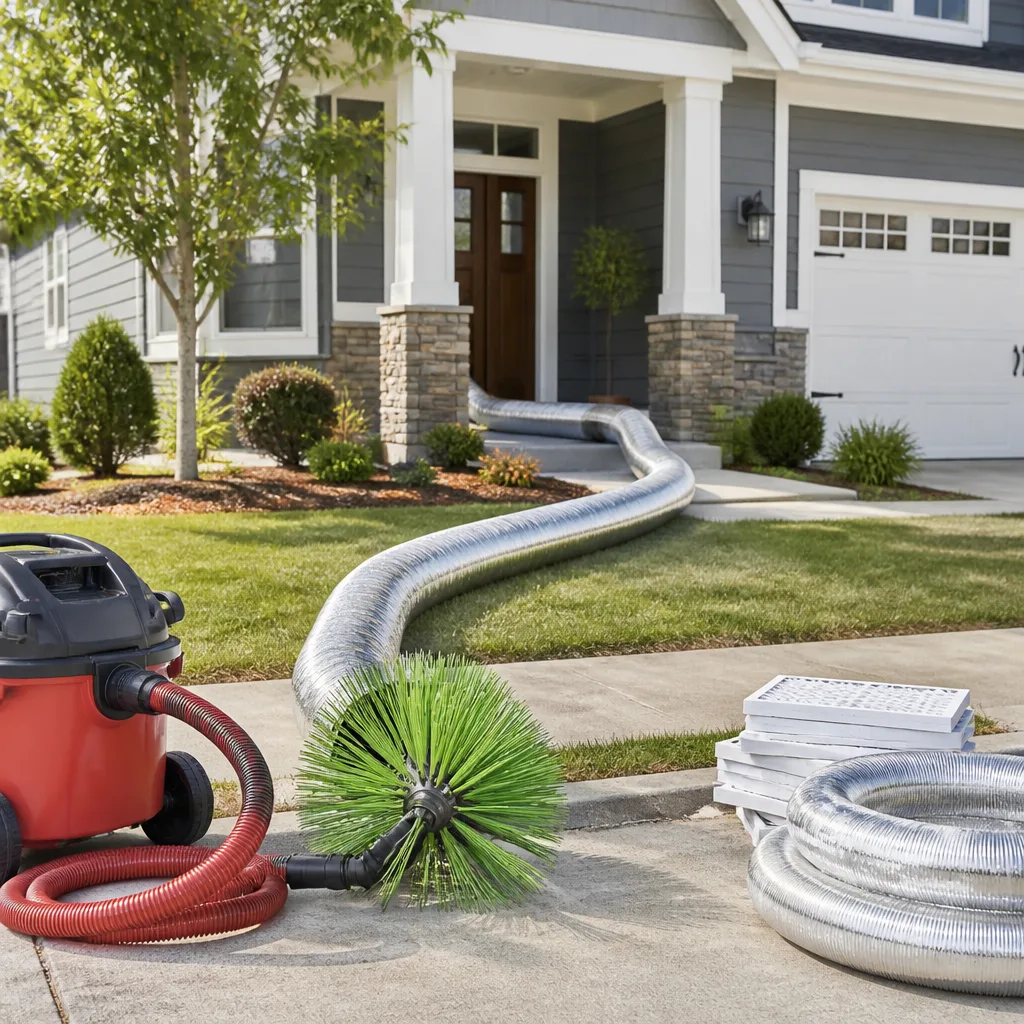 Whole-home duct cleaning
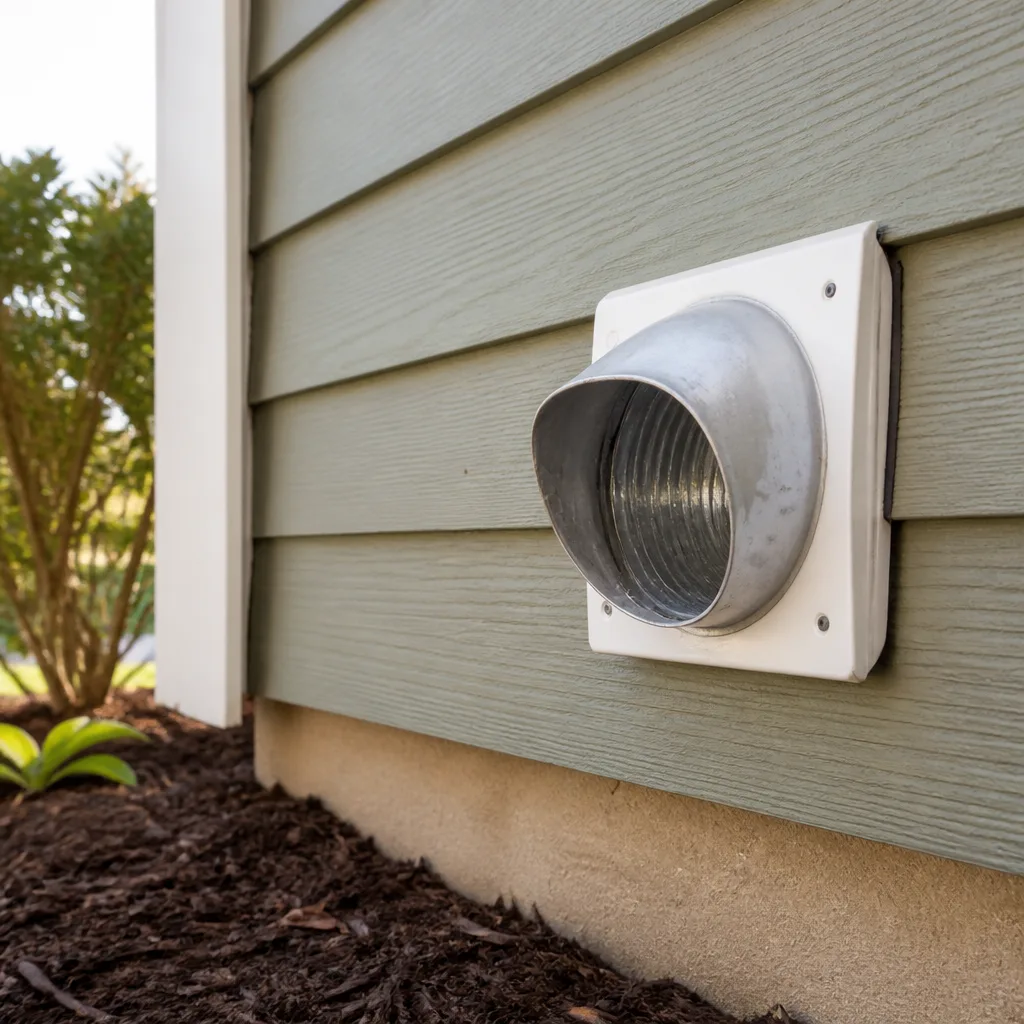 Dryer vent cleaning
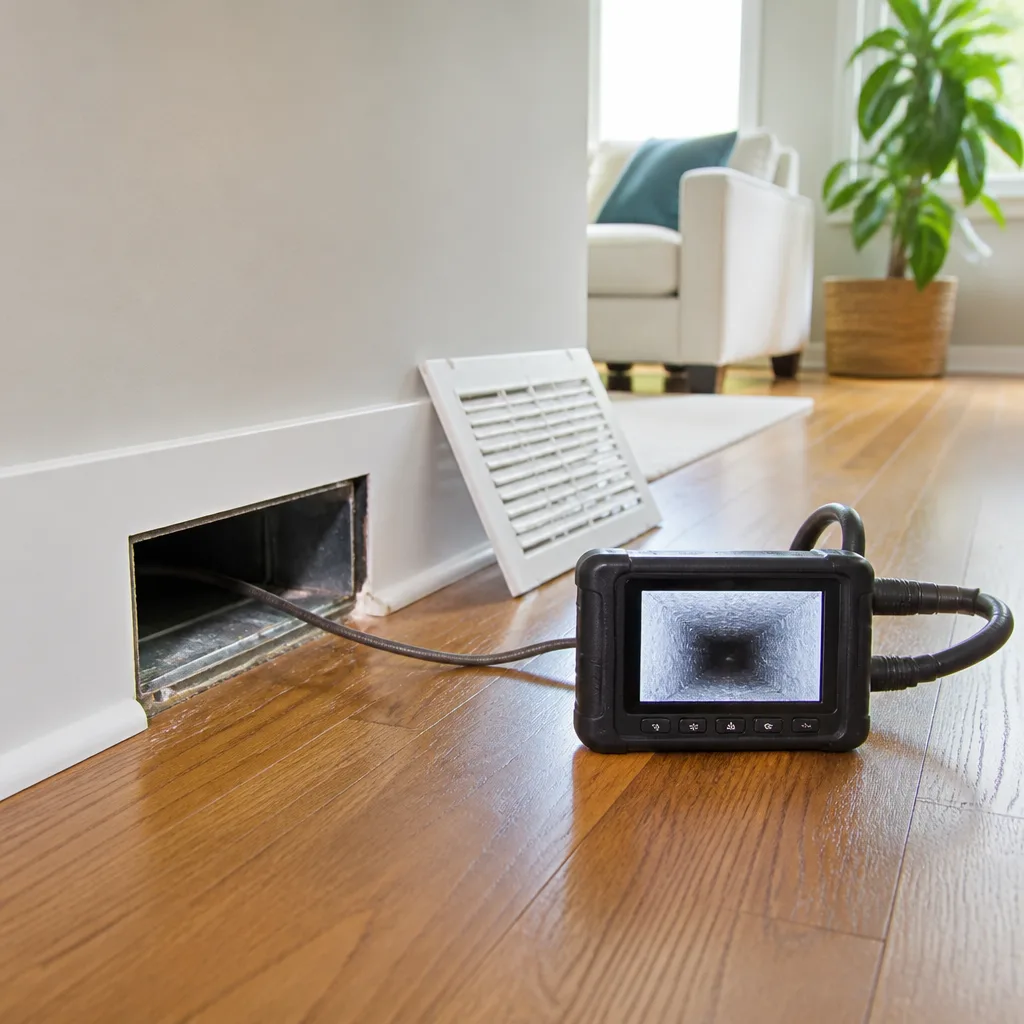 Camera inspection
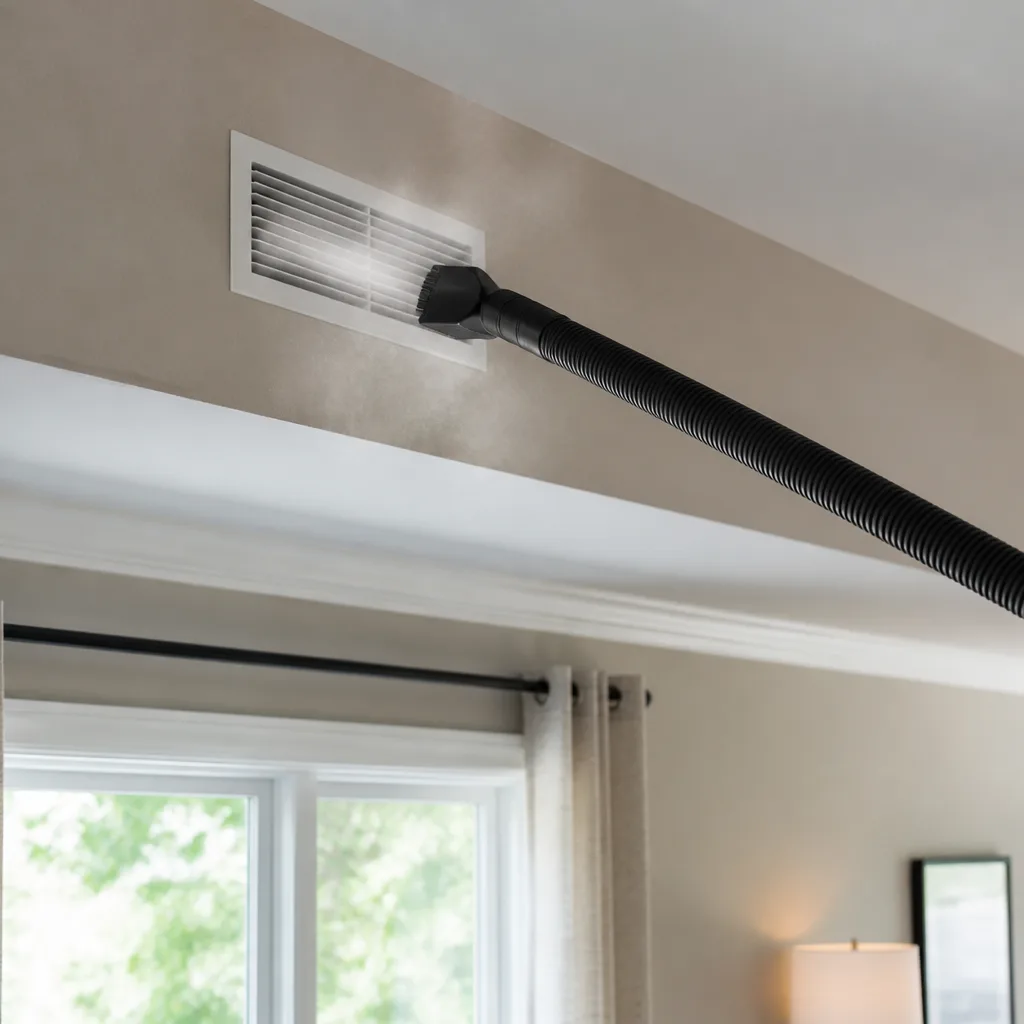 Sanitizing & deodorizing
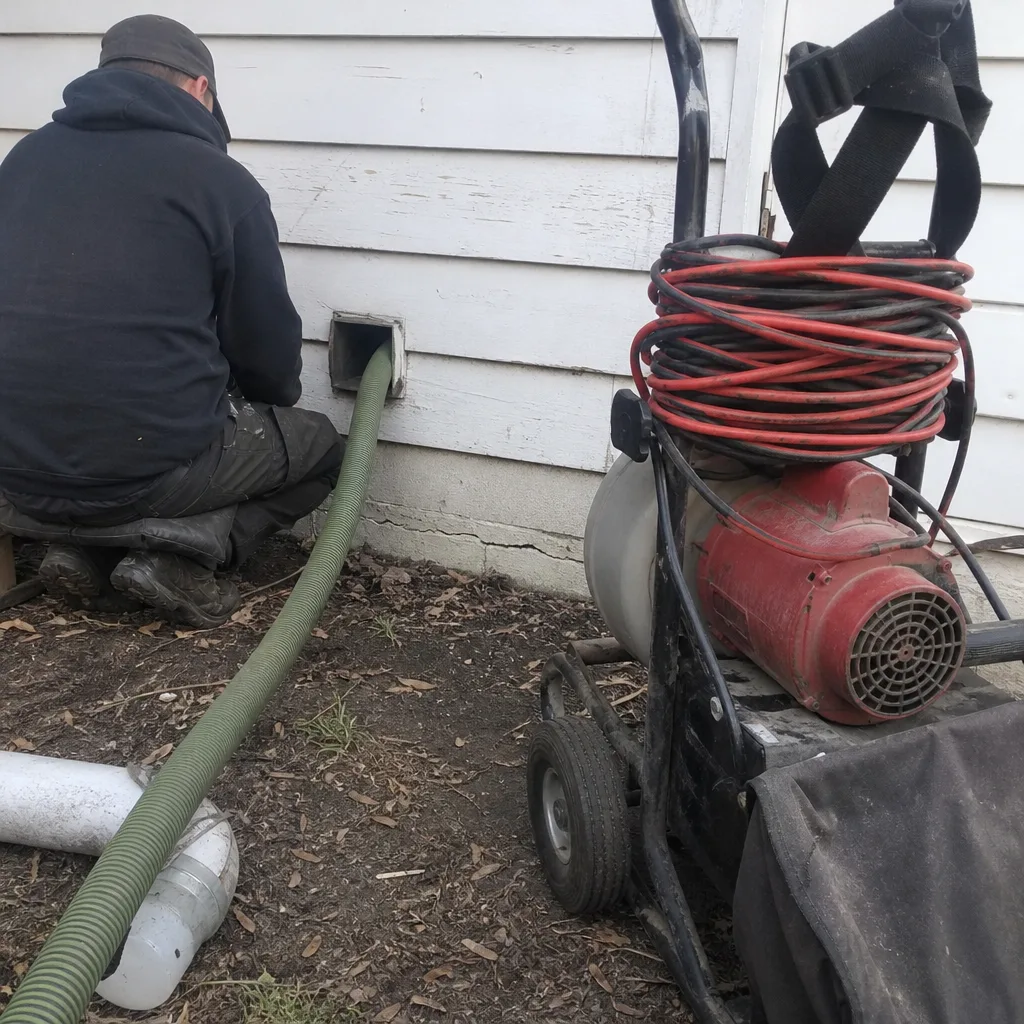
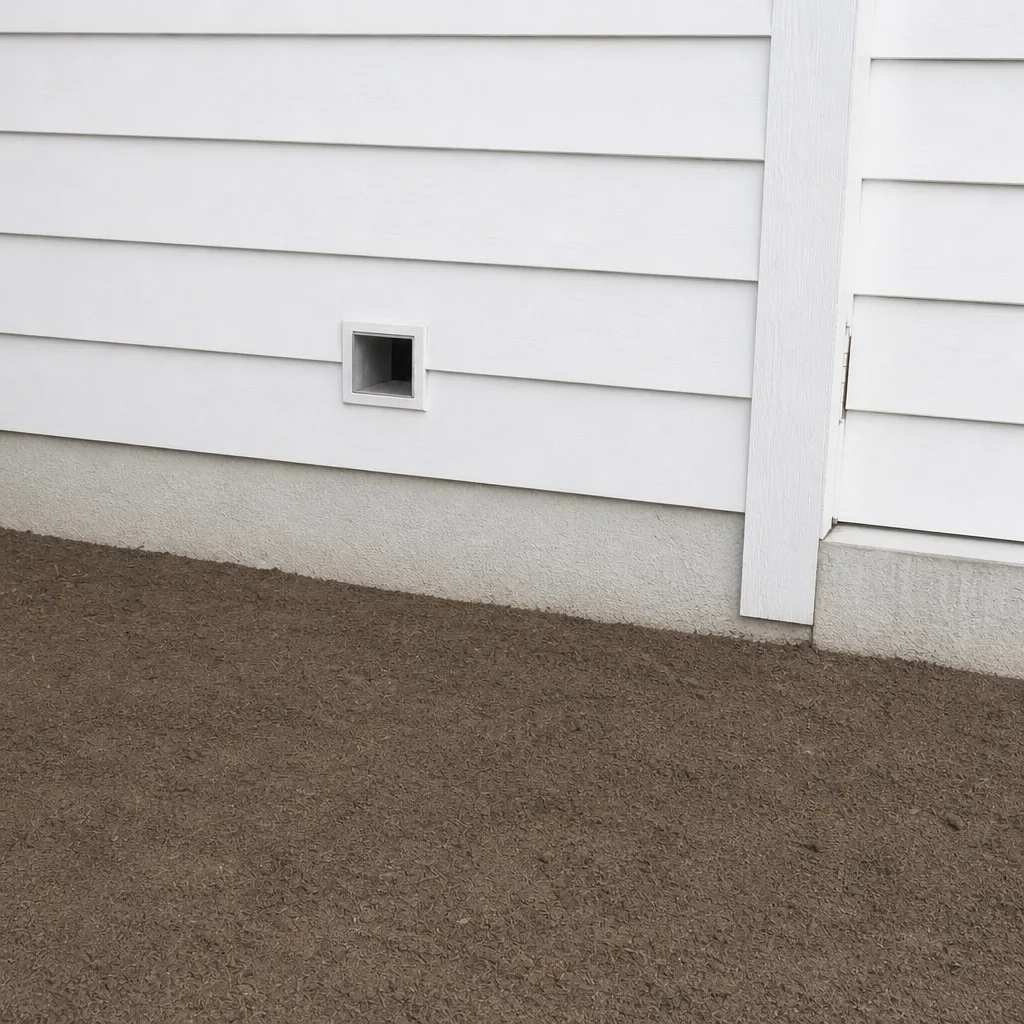
Whole-system duct and dryer vent check with before-and-after photos - you see exactly what came out of your vents
That "$99 whole-house special" is a bait ad - the real number appears once they are in your hallway, or the "clean" is a shop-vac at the register. We photograph the inside of your ducts before and after instead.
Air Duct Cleaning Troubleshooting in St. Paul: Common Problems and How to Fix Them
A clogged duct and a disconnected duct trunk produce nearly identical symptoms at the register. Both leave you with a weak, dusty flow of air and one room that never quite warms up. But one needs a vacuum and the other needs sheet metal work, and treating them as the same problem wastes money on both ends – either you pay for a cleaning that can’t fix a break, or you pay for a repair when all the system needed was a thorough cleaning. In St. Paul, where the housing stock runs from pre-war bungalows to mid-century ramblers, the confusion is common. This guide shows you how to tell which category your problem falls into before you pick up the phone, and what to check once you do.
Styles & brands we work with
- Whole-home duct cleaning
- Dryer vent cleaning
- Camera inspection
- Sanitizing & deodorizing
Quick Answer
Most duct complaints in St. Paul trace to one of two root causes: a dirty system that needs professional cleaning, or a damaged system (kinked flex runs, disconnected joints, crushed trunks) that needs air duct repair. Weak airflow, dusty registers, and uneven room temperatures can come from either, so a quick visual inspection at accessible duct sections is the fastest way to tell them apart. If you see kinks, gaps, or visible growth, cleaning alone won’t solve it.
Table of Contents
- Symptom-to-Cause Matrix: What Your Ducts Are Telling You
- How to Do a Basic Visual Inspection of Accessible Ducts
- Why Older St. Paul Homes Create Airflow Problems That Look Like Dirty Ducts
- Before vs. After Cleaning: Two Very Different Airflow Problems
- When the Problem Is Bigger Than Duct Cleaning
- Repair vs. Clean: Which Does Your System Actually Need?
- Can You Get Duct Problems Fixed Same-Day in St. Paul?
- Common Mistakes to Avoid
- When to Call a Professional
- Frequently Asked Questions
Symptom-to-Cause Matrix: What Your Ducts Are Telling You
The complaint you walk in with usually points to one of four or five likely culprits. Reading the symptom correctly saves you the cost of guessing. Here’s how the most common duct problems in St. Paul map to their likely origins. We’ve seen this pattern play out across the city, from Highland Park to the East Side.
- Dusty registers that return within days of cleaning: Likely active dirt in the supply trunk or a gap in a return-side joint pulling attic or crawlspace air into the system. If the registers stay dust-free longer after a professional cleaning, the dirt source was inside the ducts.
- One or two rooms always cold in winter: Usually a design limitation (long run, undersized branch, or a boot that’s poorly sealed at the floor plate) rather than a dirt problem. St. Paul’s older two-story homes with single-zone furnaces feel this most.
- Weak airflow at every register: Often a crushed or kinked flex duct at a tight elbow, sometimes a partially closed damper, or a blower wheel caked with debris. Cleaning addresses the blower side; airflow testing addresses the design.
- Musty or damp smell on startup: Usually condensation-related growth inside ductwork or on the evaporator coil. St. Paul’s long humid stretch from June into September drives this pattern.
- Burning or hot smell at the furnace startup: Often dust burning off the heat exchanger on the first heat cycle of the season. If it continues or smells electrical, stop using the system and call an HVAC technician – that’s the line where duct cleaning is the wrong answer.
- Whistling or roaring at one register: Frequently a disconnected boot or a gap between the floor register and the duct underneath. Air escapes into the joist bay rather than into the room.
Map your symptom to a category before you shop. A dust-and-smell problem is usually a cleaning call. An airflow or noise problem is usually a repair-or-diagnostic call. When the two overlap – and in St. Paul they often do – a company that does both (like us) can handle it in one visit rather than sending you to a second contractor. If you’re starting fresh, Ambassador Air Duct Cleaning is where the rest of this guide comes from.
How to Do a Basic Visual Inspection of Accessible Ducts
You don’t need to open a wall to get useful information. Any accessible section of ductwork – a branch run in an unfinished basement, the supply plenum above the furnace, a ceiling boot from a removed register – tells you whether cleaning alone will do the job. Here’s the sequence we suggest for St. Paul homeowners who want to scope the situation first.
- Pop a supply register cover and look into the boot with a flashlight. Shine the light along the inside of the duct wall. Light dust is normal. Caked, fuzzy, matted accumulation, visible debris, or a dark film that rubs off on a white cloth is not.
- Check the return-side grille and filter slot. A return that’s pulling air from a dirty crawlspace or basement will often show visible debris on the filter face within days of replacement. That points to a return-side gap or a compromised trunk.
- In an unfinished basement, follow the duct runs from the furnace. Look for flex duct that’s been kinked at a 90-degree elbow, crushed under a joist strap, or disconnected at a collar. A run that pinches to half its diameter at a bend is starving every register downstream.
- Look for gaps at joints and boots. Sheet-metal joints are taped, screwed, or mastic-sealed. Cracked tape, sections that pull apart by hand, or a boot hovering a half inch above the subfloor all mean air is escaping into the joist bay. In St. Paul’s older homes, these joints have had decades of seasonal expansion and contraction cycles to work loose.
- Shine a light along the evaporator coil face (with the power off and the panel removed only if you’re comfortable with the safety protocol – otherwise look through the filter slot with a mirror). A matted, gray-brown blanket on the coil is an indoor air quality issue, not a duct-cleaning one.
- Look and smell for growth. Visible dark spotting or mottling on duct liner, a persistent musty smell that intensifies when the fan runs, or condensation on cold duct surfaces all point to moisture.
If you see flex duct that’s crushed or kinked, disconnected joints, or visible growth, note it as a repair or IAQ situation, not a cleaning one. Cleaning a kinked or broken duct doesn’t restore airflow. And burning smell, electrical smell, or a fan that’s pulling dirt continuously (rather than depositing it) all point to a different trade or a different service altogether.
What Each Warning Sign Actually Means
- Flex duct kinks or crushed runs: Airflow loss downstream of the kink. Cleaning won’t fix it – the run needs to be re-supported or replaced.
- Disconnected joint: Supply air leaking into a joist bay (cold rooms, dust draw) or return air pulling unconditioned air into the system. Repair first, then clean.
- Visible mold or damp liner: Beyond routine cleaning. This calls for containment grading, and it’s where equipment like Abatement Technologies negative-pressure containment comes in, rather than a standard rotary brush and vacuum.
- Heavy matted liner: The fiberglass duct liner has degraded. Cleaning can remove the debris but won’t restore the liner; on older systems replacement is sometimes the honest answer.
- Caked blower wheel: A wheel loaded with debris throws off its balance and drops airflow to every register. Sometimes cleaning alone can address this; sometimes replacement is needed.
Why Older St. Paul Homes Create Airflow Problems That Look Like Dirty Ducts
St. Paul’s older housing stock – much of it built before 1980 when gravity and early forced-air “octopus” furnace layouts were common – produces airflow patterns that mimic dirty ducts but are actually design limitations. Radially arranged duct runs off a central plenum, sized for a coal or early oil furnace, rarely match the airflow profile of a modern high-efficiency blower. You clean the system thoroughly and the far bedroom is still slow to heat. That’s not because the ducts are dirty. It’s because they were never designed for the airflow the newer furnace wants to push.
In neighborhoods across St. Paul where that older stock is thickest, we see three recurring layout issues.
- Undersized branch runs: A 5-inch round was fine for a coal-era gravity furnace; it strangles a modern blower. The fix isn’t cleaning, it’s resizing or adding a register. That’s a design conversation.
- Long, uninsulated runs through unconditioned space: A supply duct that travels 25 feet through a cold basement or attic loses most of its heat before reaching the room. Insulating or rerouting the run can recover real comfort.
- One-zone systems serving two-story homes: Warm air rises. The upper floor stays warm and the lower floor struggles, or the reverse depending on the return design. Balance is a damper-and-return problem, not a cleanliness problem.
This isn’t a defect – it’s the architecture of an older home. What it asks of you is honesty about what cleaning can and can’t accomplish. A thorough cleaning removes the biological load and the accumulated debris; it doesn’t redesign a 1950s duct layout. If you’ve had the ducts cleaned and the far bedroom is still cold in January, the answer may be airflow balancing or a run upgrade, not another cleaning.
What to Ask Before Assuming Your Ducts Are “Just Dirty”
- How many square feet of conditioned space, and how many supply and return registers?
- How old is the current furnace or air handler relative to the duct layout?
- Is the complaint about dust, smell, or temperature – or all three?
- Has someone run an airflow measurement at the problem register with a balancing hood? If not, request one.
Before vs. After Cleaning: Two Very Different Airflow Problems
If your complaint is weak airflow, the timing matters more than the symptom. Airflow that’s been weak since you moved in is a design or damage problem. Airflow that drops noticeably after a cleaning points to a post-service issue. And airflow that improves for a week or two after cleaning and then returns to weak points to a source of contamination or a hidden break.
In our experience across St. Paul, the “still weak after cleaning” cases usually come down to four causes. The first is a supply register that’s been closed by accident (or blocked by furniture) and the homeowner assumes it’s a duct problem. The second is a boot that came loose from the floor plate during the cleaning itself, letting air escape into the joist bay instead of the room. That’s a re-seal, not a re-clean. The third is a damper that was closed off during the visit and not reopened. The fourth is a compromised duct – kinked flex, disconnected collar – that was there all along and just became visible once the debris was gone.
If you’ve had air duct cleaning done and the symptoms persist, ask the technician three specific questions before booking another visit.
- Did your airflow measurements before and after show a measurable change at each register? If so, what were the numbers?
- Did you inspect every accessible branch for disconnected joints, kinks, and boot seals – and if so, what did you find?
- Do you have before-and-after photos of my actual ducts, not generic ones?
A company that did the work properly should be able to answer all three. Our jobs include before-and-after photos of your own ductwork as standard, and one flat price per system agreed before work starts, so there are no surprises once the equipment is out of the van. If symptoms persist after a cleaning, the honest response is to look for a repair or design problem, not to sell another cleaning.
When the Problem Is Bigger Than Duct Cleaning
Some duct symptoms are really IAQ symptoms dressed up as duct symptoms. Cleaning removes debris from inside the duct walls; it doesn’t rescue a system with contamination in the coil, the plenum, the duct liner, or the crawlspace the return draws from. Here’s where the boundary sits, based on what we see in St. Paul homes.
- Evaporator coil contamination: A matted, gray-brown blanket on the coil face reduces airflow and drives that “musty on startup” smell. Duct cleaning can’t fix it – the coil needs cleaning, sometimes by an HVAC technician.
- Duct liner degradation: Older insulated ductwork can shed its internal liner, sending fiberglass fibers into the air supply. If the liner is failing, replacement is usually the answer, not cleaning.
- Crawlspace or basement return draw: A return that pulls air through a damp, unconditioned space spreads that dampness through the house. The fix is sealing the return path, not cleaning the duct downstream.
- Mold inside ductwork: If a visual inspection shows growth, or the smell intensifies when the fan runs, this moves into contained remediation territory. Our roster includes Abatement Technologies equipment for jobs that need negative-pressure containment and contamination-handling protocols beyond a routine cleaning visit.
- Whole-home humidity issues: St. Paul’s humid summers and the shoulder seasons where the AC runs and then doesn’t can leave ductwork damp. Whole-home dehumidification (through a partner like Aprilaire) sometimes solves the root cause better than repeated cleanings.
The pattern to look for: if a duct cleaning solved your complaint, the dirt was inside the ducts. If the complaint returns, or if it’s really about smell or dampness that isn’t in the duct itself, you’re in IAQ territory and the conversation needs to widen.
The IAQ Equipment Question
When we grade a job for contamination, we bring equipment for the grade we find. Routine cleaning uses professional rotary contact systems – Rotobrush and Nikro on every job – and jobs with contamination concerns use Abatement Technologies containment. If a company shows up with a shop vac and a promise, the equipment itself tells you whether they can handle anything beyond a routine clean. Ask before you book.
Repair vs. Clean: Which Does Your System Actually Need?
Here’s a practical decision tree. Start with your symptom and work through the questions in order. The first “yes” tells you what the likely next call is.
- Is there visible debris, dust, or musty smell at accessible sections? Yes – cleaning is likely part of the answer. No – cleaning alone is unlikely to change your complaint.
- Is a duct run kinked, crushed, disconnected, or hanging loose? Yes – repair first, then clean. Cleaning a broken duct doesn’t restore airflow.
- Is there visible growth or persistent dampness in the duct? Yes – IAQ assessment with proper containment, not routine cleaning.
- Is the complaint about temperature in one room rather than dust or smell? Yes – airflow or design issue; ask for airflow testing and a boot-seal inspection.
- Is there a burning, electrical, or hot smell at startup? Yes – stop using the system and call an HVAC technician. This is not a duct cleaning call.
- None of the above, but you’re unsure of the state of the system? A visual inspection and airflow measurement from a company that does both cleaning and repair is the fastest way to sort it out.
Very few residential duct companies actually do repair. Most clean around a broken joint and call the visit complete. We do both – dryer vent cleaning is our other safety-critical service – which means we can diagnose and fix the same structural issues we find on a cleaning visit, rather than leaving the job half-done.
What Air Duct Repair Actually Involves
Repair is usually more focused than homeowners expect. A re-sealed boot takes minutes. A flex run re-supported or replaced takes a bit longer. Reconnecting a plenum or resealing a trunk takes more planning, especially in tight basement framing common in St. Paul’s older homes. What it doesn’t involve is opening walls or replacing the entire system – most repairs we do happen at accessible points, using sheet metal work, mastic, and proper support strapping to solve the problem at the source.
If repair and cleaning are both needed, the sequence matters. Repair the structural break first, then clean the system so debris that blew into the joist bay or settled elsewhere gets captured. Doing it the other way around means you pay for cleaning work that gets immediately undone by the break.
Can You Get Duct Problems Fixed Same-Day in St. Paul?
Many duct problems in St. Paul can be diagnosed and addressed the same day, especially when the complaint is routine dust, a musty smell, or a clear repair point identified on a visual inspection. Same-day availability depends on scheduling, the size of the system, and whether the diagnosis opens up a bigger repair than expected. We answer the phones 24/7, and dispatch runs 7am to 7pm Sunday through Friday, closed Saturday. A call outside dispatch hours is booked into the next opening. Fast dispatch, 7am-7pm.
What “same day” doesn’t mean is the whole job will always finish in a single visit. A complex repair combined with a full cleaning sometimes needs two stops, and being honest about that up front beats promising a one-visit fix that overruns. If a same-day visit is important to you, say so when you call – it lets us look at the schedule and the diagnosis together.
Common Mistakes to Avoid
- Assuming any airflow complaint means the ducts are dirty. Weak airflow is more often a kinked run, a loose boot, or a design limitation. Cleaning a system with a kink or a gap wastes money because the airflow doesn’t come back.
- Cleaning before repairing. If a joint is disconnected or a run is crushed, clean the system second. Repair the break, then clean, or the debris you remove will be replaced by more from the leaky joint within weeks.
- Skipping the before-and-after photos. A cleaning you can’t see evidence of is a cleaning you can’t verify. Ask for photos of your actual ducts, not stock images.
- Choosing the cheapest quote. The gap between quotes is usually the equipment. A shop vac and a rotary brush at low cost versus a professional Rotobrush or Nikro contact-cleaning system on every job are not the same service. Ask what equipment the company will bring before you book.
- Ignoring a burning smell at startup. If the smell is dust burning off the heat exchanger, it usually fades after the first few heat cycles of the season. If it persists or smells electrical, stop using the system and call an HVAC technician – the honest answer is that this isn’t a duct cleaning call.
- Treating a musty smell as a duct-only problem. If the smell returns after cleaning, or if the coil is matted, the problem is bigger. Look at the coil, the return path, and the duct liner before booking another cleaning.
- Assuming a post-cleaning problem means the cleaning failed. A boot that separated during the visit or a damper that was closed and not reopened are common, fixable, and don’t require a second full clean.
When to Call a Professional
Call a professional when a visual inspection shows caked debris, visible growth, disconnected joints, kinked flex, or damp liner – and especially when your complaint is a musty or burning smell at startup, or airflow that stays weak in specific rooms despite a previous cleaning. Call sooner if you’re renovating (dust has a way of finding the system before you do), if you’ve just bought an older St. Paul home and want to know the state of the ductwork, or if you’re having allergy-like symptoms that track with the furnace cycling on. And call a different trade first if the smell is electrical or hot – that’s a furnace safety issue, not a duct one.
Ambassador Air Duct Cleaning offers free estimates in St. Paul and works across the city and nearby communities St. Paul homeowners regularly ask us about. The written estimate sets the final price – one flat price per system agreed before work starts, with before-and-after photos of your own ducts so you can see what was actually removed. Call (888) 501-7655. We answer 24/7. Fast dispatch from 7am to 7pm, Sunday through Friday.
What to Have Ready When You Call
- Your symptom in one sentence: dust, smell, temperature, or noise.
- How long the complaint has been present, and whether it started before or after a previous cleaning.
- Roughly how old the home is and how the furnace air handler is configured, if you know.
- Any visible signs you noticed during a quick inspection of accessible ducts.
Frequently Asked Questions
Look at what your ducts are doing rather than how old they are. Dust, musty smell, and visible debris at accessible sections point to cleaning. Weak airflow that never returns after cleaning, visible kinks or disconnected joints, or a boot that’s separated from the floor plate point to repair. Ask the company you call whether they do both – very few residential duct companies do – because a company that only cleans will always recommend cleaning, and one that only repairs will always recommend repair. One that does both can give you an honest answer.
Cheaper quotes usually come from a difference in equipment and time on site. A shop vac and a hand brush at the register isn’t the same as a professional rotary contact-cleaning system like Rotobrush or Nikro working through every branch and the trunk, and the difference shows up in what’s removed and how long the technician is actually in the house. Ask what equipment will be used, roughly how long the visit will take, and whether before-and-after photos of your own ducts are included. Call (888) 501-7655 for an exact quote – the estimate is free and the written estimate sets the price.
For a well-sealed system in a home with a clean return path, cleaning every few years is plenty. Shorter intervals become worthwhile if you’ve just finished a renovation, if you have a pet that sheds heavily, if the home is older and the return path pulls from a damp basement or crawlspace, or if a family member is sensitive to dust. If you’re getting a musty smell within weeks of a cleaning, that’s not a “clean more often” problem – it’s a signal to check the coil, the return path, and the duct liner instead.
Usually not. What you’re smelling is often dust burning off the heat exchanger on the first few heat cycles of the season, and it typically fades on its own. It becomes a duct service question only if the smell returns mid-season or if the ducts themselves are visibly loaded with debris. If the smell is electrical, hot metal, or accompanied by any visible or audible sign of trouble at the furnace, stop using the system and call an HVAC technician – that’s a safety call, not a duct cleaning one.
In pre-1980 homes across St. Paul, the usual answer is a duct design limitation, not dirt. Radial “octopus” furnace layouts sized for a gravity system rarely match the airflow of a modern blower, and long uninsulated runs through cold basements lose most of the heat before reaching the room. Occasionally the culprit is a kinked flex duct or a boot that’s separated from the floor plate, which is fixable with a repair. Airflow measurement and a visual inspection at accessible sections will usually tell you which problem you have within the first visit.
Ask three questions: did you measure airflow before and after at each register, and what were the numbers; did you inspect every accessible branch for kinks, disconnected joints, and boot seals, and what did you find; and do you have before-and-after photos of my actual ducts. A company that did the work well can answer all three. If the answers are vague, the visit may have been a register-level pass rather than a full-system clean, and a second opinion is worth getting. Call (888) 501-7655 for a free estimate and we’ll walk you through what a proper visit should include.
The Bottom Line
Duct problems in St. Paul come down to two questions: is the problem inside the duct (dirt, smell, growth), or is it the duct itself (kinks, gaps, disconnected joints)? Answer that first and you’ll avoid both the wasted cleaning call and the pointless repair call. A quick visual inspection at accessible sections usually tells you which category you’re in. And if your complaint persists after a cleaning, ask for airflow numbers, a repair inspection, and before-and-after photos of your own system – that’s how you tell thorough work from a register-level pass.
Scope Before You Book
When you’re ready to stop troubleshooting and get an answer, call Ambassador Air Duct Cleaning at (888) 501-7655 for a free estimate. We answer 24/7, and dispatch runs 7am to 7pm, Sunday through Friday. Our technicians have up to 10 years of experience, bring professional-grade Rotobrush and Nikro contact-cleaning equipment to every job, and carry Abatement Technologies containment equipment when the diagnosis points to contamination rather than routine debris. We repair what others only clean around, and we set one flat price per system in writing before work starts, with before-and-after photos of your own ducts. Call today to schedule your free estimate.
Written by the team at Ambassador Air Duct Cleaning.
See the difference
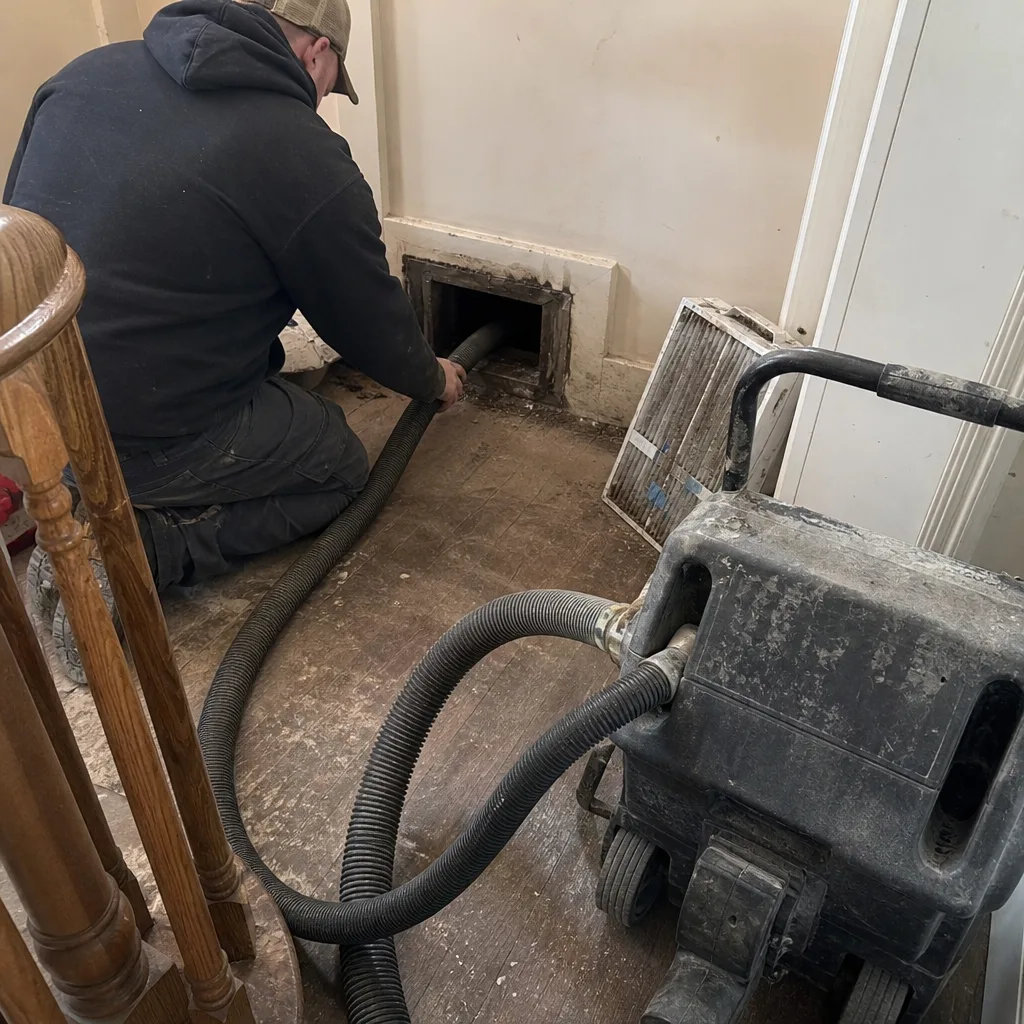 Before
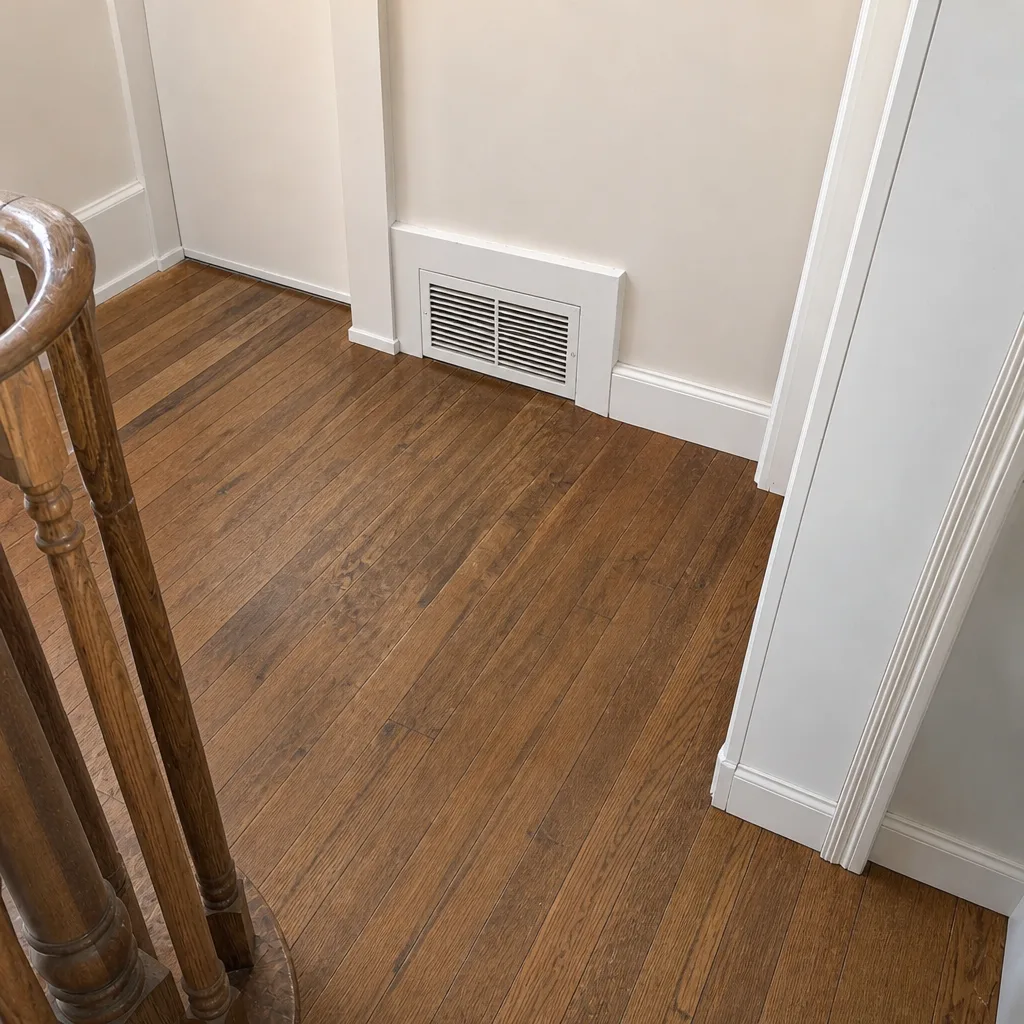 After
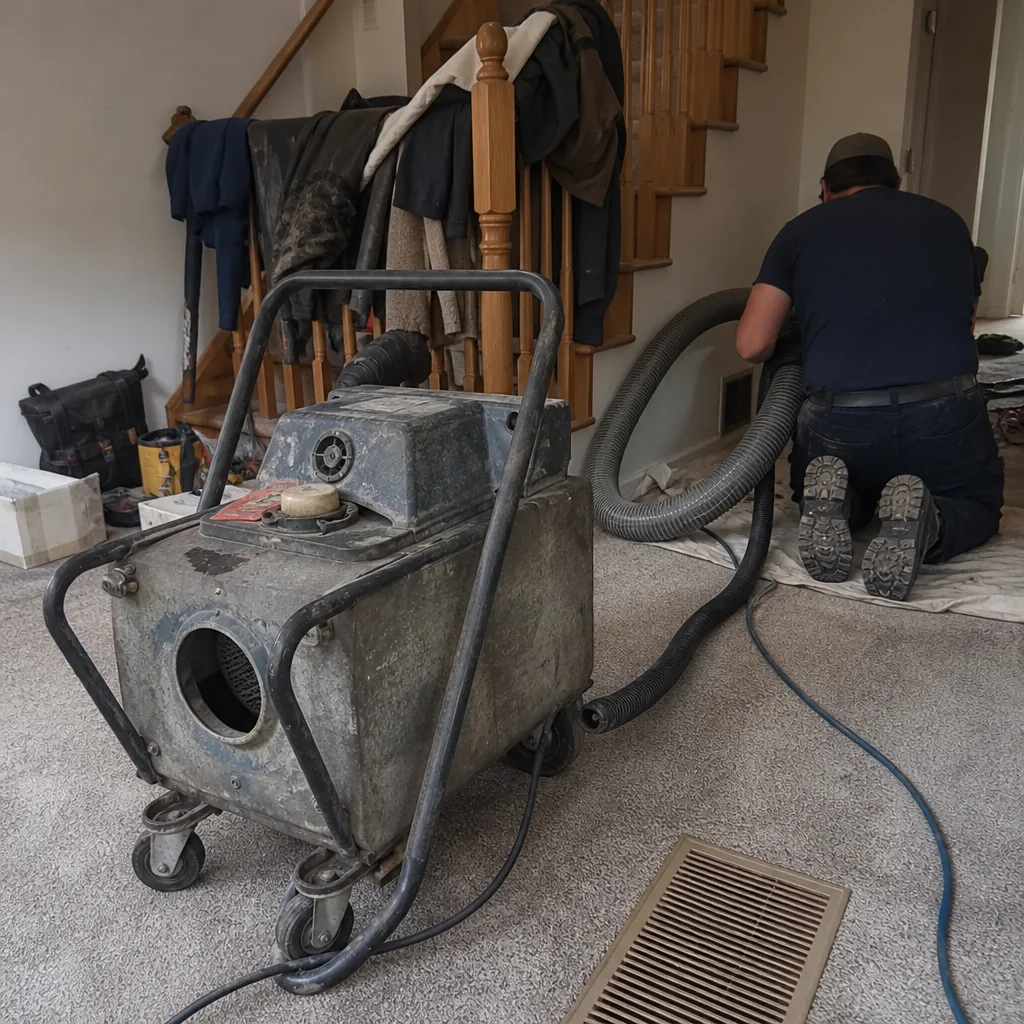 Before
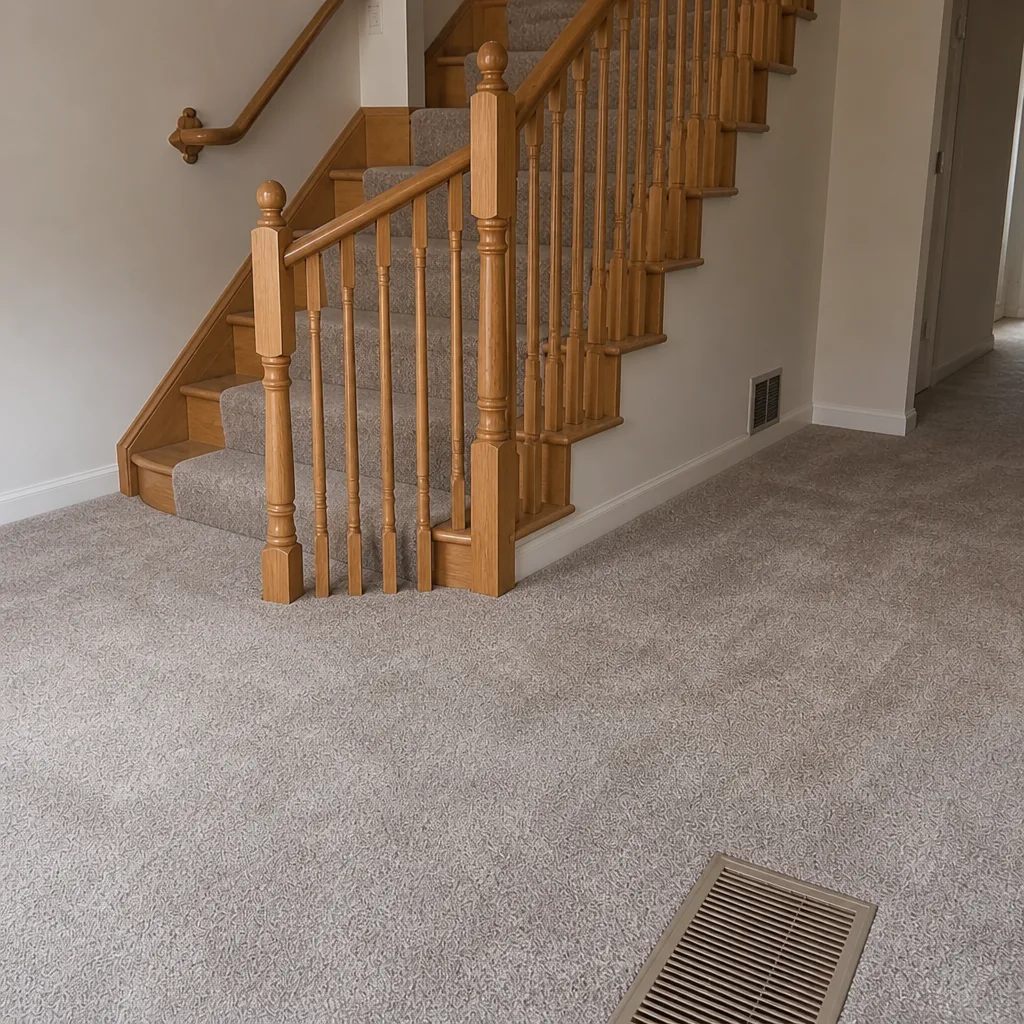 After
 Before
 After