
Last updated November 15, 2026
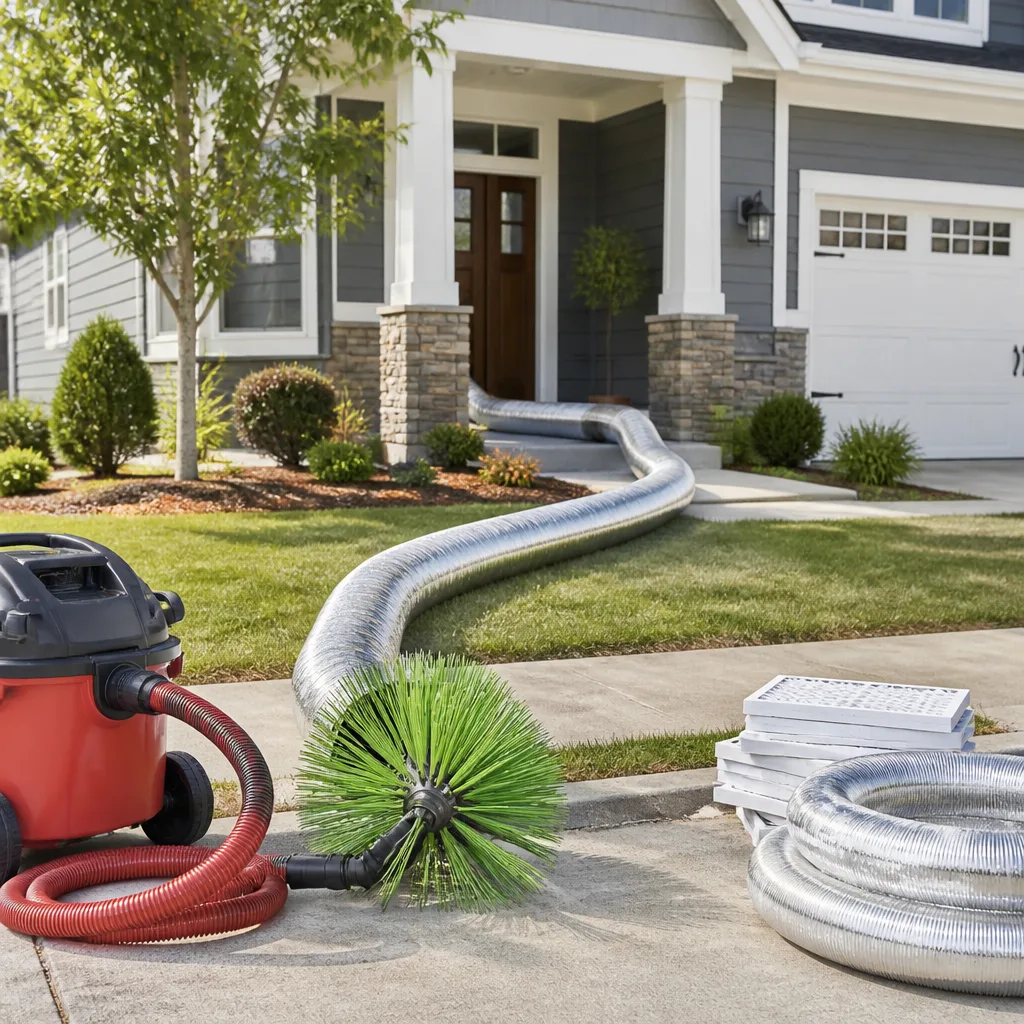 Whole-home duct cleaning
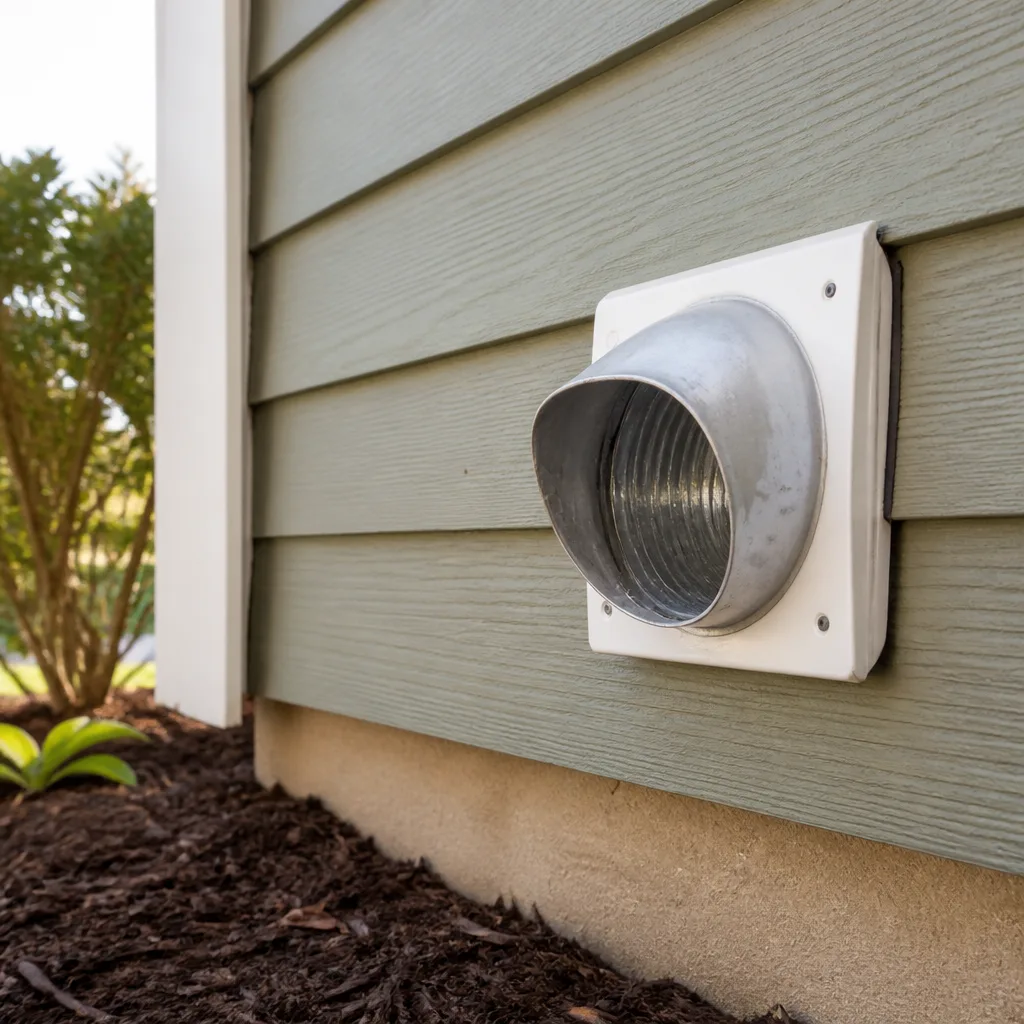 Dryer vent cleaning
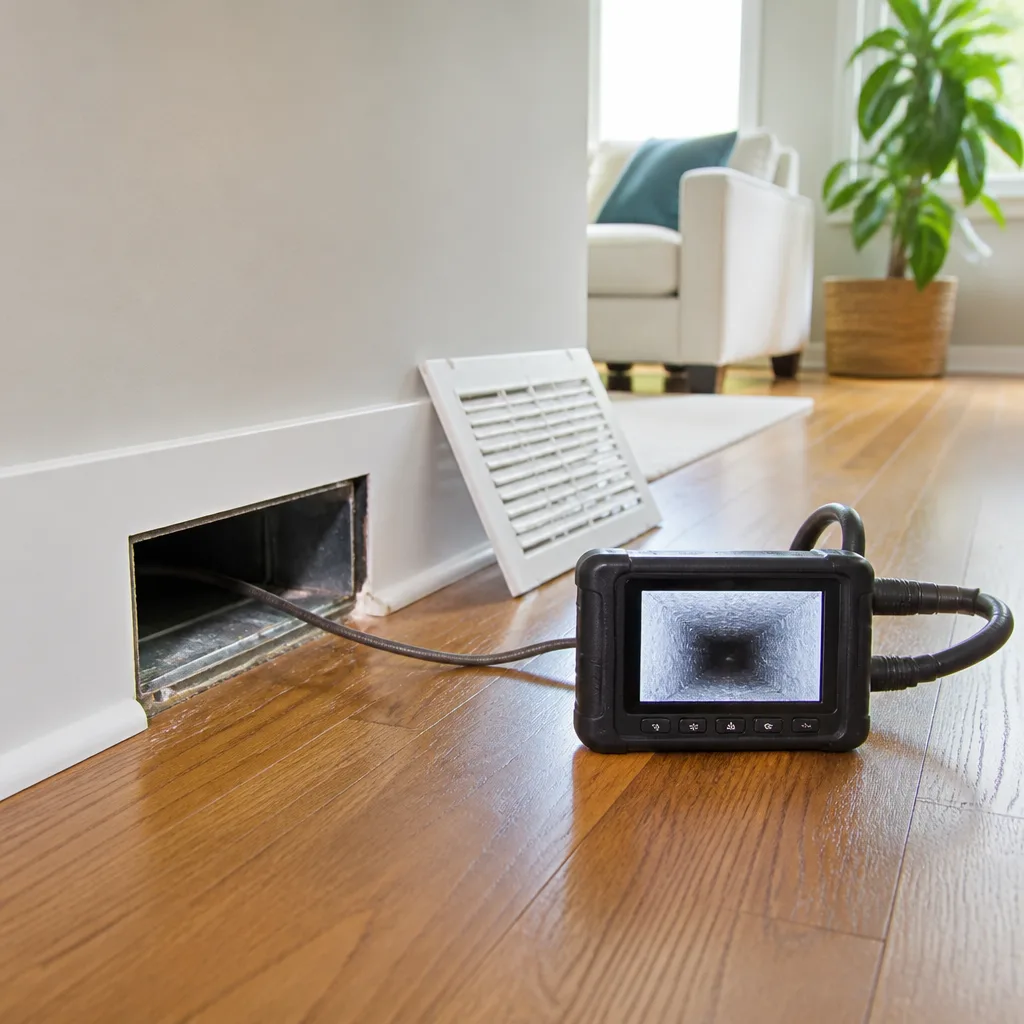 Camera inspection
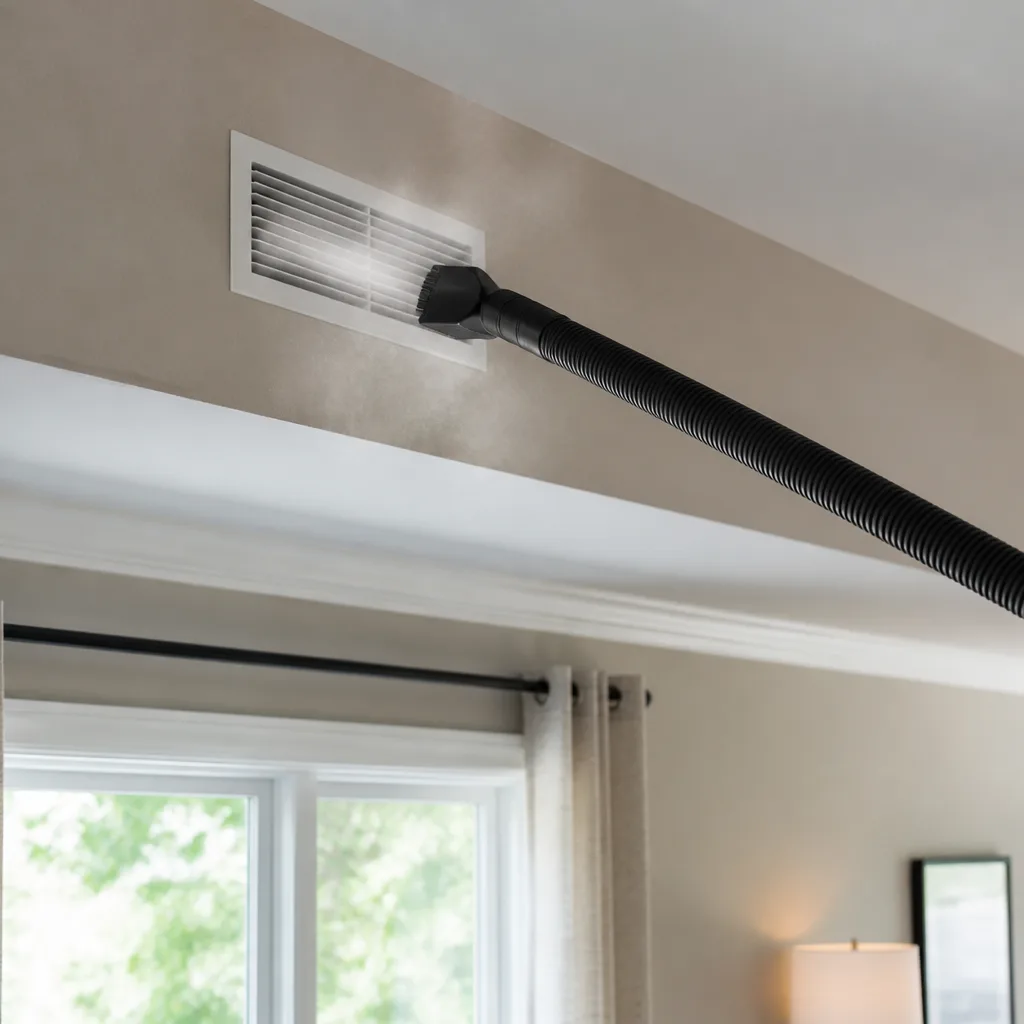 Sanitizing & deodorizing
Whole-system duct and dryer vent check with before-and-after photos - you see exactly what came out of your vents
That "$99 whole-house special" is a bait ad - the real number appears once they are in your hallway, or the "clean" is a shop-vac at the register. We photograph the inside of your ducts before and after instead.
Air Duct Cleaning Emergency Preparedness Guide for St. Paul Homes
Most homeowners treat their ductwork like the wiring inside the walls: invisible until something goes wrong. Here’s the part that catches people off guard. After a basement flood, a house fire, or a furnace that quits during a cold snap, your HVAC system may try to run on its own before anyone has looked at the ducts. If it does, whatever got inside the ductwork – soot, sewage particulate, mold spores, floodwater sediment – can travel to every room in the house within minutes. This guide walks through the three emergencies that put a St. Paul home’s duct system at risk, what to do in the first 24 hours of each one, what a post-emergency inspection actually looks for, and the documentation that makes an insurance claim move faster.
Quick Answer
After a fire, flood, or prolonged furnace failure in St. Paul, your ducts should be assessed by a professional before the HVAC system is run for any length of time. If smoke, water, or soot has entered the ductwork, turning the system on first spreads contamination through the whole house and can make the cleanup far harder than it needed to be. Shut the system down, document what you see, then call for a post-emergency inspection.
Styles & brands we work with
- Whole-home duct cleaning
- Dryer vent cleaning
- Camera inspection
- Sanitizing & deodorizing
Table of Contents
- The Three St. Paul Emergencies That Require Immediate Duct Assessment
- The First 24 Hours: Fire, Flood, and Furnace Failure
- What a Post-Emergency Duct Inspection Covers (and What a Standard Cleaning Doesn’t)
- Working With Your Insurance Adjuster on Duct Cleaning Coverage
- Pre-Emergency Documentation: The File That Lives With Your Furnace
- Why St. Paul’s Housing Stock Raises the Stakes
- Returning Home After an Event: What to Check Before You Move Back In
The Three St. Paul Emergencies That Require Immediate Duct Assessment
Not every household disruption touches your ductwork. A burst pipe in a second-floor bathroom, a tree limb on the roof, a power outage – none of those automatically create a duct problem. The three events that do are fire, flooding with water intrusion, and furnace failure followed by a delayed restart. Each one puts something into the airstream that wasn’t supposed to be there.
House fires and smoke infiltration. Smoke is not just a smell. Fire produces fine soot particles and volatile organic compounds that settle onto every surface the airstream touches, including the inside of supply and return ducts. Even a contained fire in one room can pull smoke into the return system and deposit a residue layer throughout the ductwork. That residue keeps off-gassing for weeks, which is why the smell lingers long after walls have been repainted.
Basement flooding. St. Paul’s older neighborhoods sit near the Mississippi River bottoms and on the ridges that feed stormwater downhill. When groundwater enters a basement, the furnace and ductwork often sit right in the path. Floodwater carries sediment, biological material, and whatever it picked up on the way. Once it dries inside a duct run, that material can become airborne again the first time the heat kicks on.
Furnace failure during a cold snap. When a furnace shuts down for an extended period during a January cold stretch, a house can hit freezing temperatures quickly. A cracked heat exchanger, a failed ignition, or a flame rollout that shuts the system down mid-cycle can release combustion byproducts, and it also means the duct system has been sitting undisturbed for hours or days. Restarting on top of an unknown condition is where problems compound.
What all three share is timing. The longer the system sits with contamination inside, the more settled and harder to remove it becomes. That’s the reason a duct assessment belongs near the top of your post-event checklist, not at the bottom.
The First 24 Hours: Fire, Flood, and Furnace Failure
The first day after any of these events is where most mistakes happen. People make a call to the insurance company, call a restoration crew, sweep up, and turn the heat back on when the house gets cold. That last step is the one to hold off on. Here’s how each event should be handled.
After a Fire (Even a Small One)
- Leave the HVAC system off. Do not run the heat, the air conditioning, or the fan-only setting. The fan circulates smoke residue deeper into the ductwork and into rooms that weren’t affected by the fire.
- Shut the thermostat off entirely, not just the schedule. Some thermostats will trigger a fan cycle if the mode is left on Auto. Set the mode to Off.
- Close the supply registers and returns in rooms that weren’t directly affected to slow air movement while the house is open for inspection.
- Note the fire’s location, the rooms affected, and the extent of smoke you can see. Photograph the visible smoke staining, the duct registers, and the furnace area. This becomes part of your insurance file.
- Call for a post-fire duct assessment before the heating system is restarted. Restoration companies handle the structure; they are not always duct specialists, and the two trades need to talk to each other.
The most common mistake after a fire in a St. Paul home is restarting the furnace before the ductwork has been assessed. By the time the heat comes on for the first cold night, the residue layer has already begun distributing itself through every register in the house.
After a Basement Flood
- Turn off power to the furnace and any basement electrical equipment before you enter standing water. This is a shock hazard, and it’s the reason a licensed electrician or utility worker should be involved if water is near the panel.
- Shut down the HVAC system at the thermostat. A flooded basement is exactly the scenario in the opening of this guide – the system can try to run, and it will push whatever entered the ducts into every room above.
- Do not run a shop vac on wet duct interiors. Consumer vacuums are not sealed for biological material, and a wet/dry shop vac will start aerosolizing whatever it picks up.
- Document the water line on the furnace, ductwork, and any equipment before anything is removed. The water line is a key reference point for your adjuster.
- Call for a duct inspection once the water has been extracted. The ducts need to dry, but they need to be inspected wet and dry, because contamination that isn’t visible when wet can become airborne when dry.
After a Furnace Failure During a Cold Snap
- Do not repeatedly cycle the furnace on and off to see if it will catch. If the failure involves a cracked heat exchanger or a gas issue, every cycle is a potential carbon monoxide event.
- Leave the house and call the gas utility if you smell sulfur or if your carbon monoxide alarm sounds. This is not a wait-and-see scenario.
- If the failure was electrical or ignition-related and safe, arrange service with a licensed HVAC contractor. After repairs, have the duct system inspected for any byproduct that may have entered during the failure window.
- Photograph any soot, smell, or visible change in the ductwork and registers before repair work starts.
- Ask for the furnace repair documentation from the HVAC contractor – your duct inspector will need it to know what the system was doing when it failed.
In St. Paul, cold snaps that push a furnace to fail typically arrive without warning, and a house can lose heat fast. If you end up on a Sunday with a dead furnace, call us and we will book the assessment for the next opening. We are closed on Saturday, and we don’t want anyone spending a cold night without a plan.
What a Post-Emergency Duct Inspection Covers (and What a Standard Cleaning Doesn’t)
A standard duct cleaning is designed to remove accumulated dust and debris from a system that is otherwise in normal working order. A post-emergency inspection is a different job. It answers three questions a routine cleaning never asks: what got in, how far did it spread, and is the ductwork still structurally sound.
Here’s what a proper post-emergency inspection covers that a routine cleaning does not:
- Contamination mapping. A smoke or flood event leaves a signature trail. Soot depth varies by distance from the source, and water staining shows exactly where moisture reached. The inspector traces where the contamination actually is so cleaning targets the right runs instead of doing a uniform pass over the whole system.
- Moisture readings inside the duct interior. Wet duct liner, wet insulation, and standing water in low points of the ductwork create a mold growth environment. A routine cleaning skips this. A post-emergency inspection checks for it.
- Structural integrity of the duct runs. Fire heat can warp ducts or loosen joints. Floodwater can cause liner delamination. An inspection that doesn’t look at the ducts themselves can leave the homeowner cleaning a system that’s about to fail.
- Seal and joint inspection. Water and smoke both find their way through every loose joint and unsealed boot. Inspectors test for leaks and identify where the envelope has failed.
- Documentation for insurance and future reference. The inspection report is a written record of the duct condition after the event, with photo evidence of what was found and what was done. That document is what a claims adjuster actually uses to justify the remediation line item.
A standard cleaning typically checks none of these. It vacuums. It may brush. It puts the system back together and moves on. A post-emergency inspection checks condition first, cleaning second.
This is also why the equipment matters. Professional-grade systems like the contact-cleaning equipment from Rotobrush and the Nikro HEPA units are built to handle the volumes and contamination types a fire or flood creates. A shop-vac setup on a post-emergency job is not just less effective; it can aerosolize contamination back into the house. We also carry Abatement Technologies equipment for jobs that need negative-pressure containment – contamination situations that go beyond a routine cleaning – and use those tools when the inspection shows they’re needed.
Working With Your Insurance Adjuster on Duct Cleaning Coverage
Duct cleaning after a fire or flood is usually covered under the dwelling protection portion of a homeowner’s policy, but it’s often not itemized in the first adjuster estimate. It gets missed. The homeowner has to ask for it, and asking effectively means presenting the right documentation.
Here’s the practical path:
- Notify your insurer immediately after the event – even before cleanup begins. Most policies require prompt notice, and the adjuster assignment process takes time.
- Take photographs before any cleanup of the visible smoke staining, water line, duct registers, and the furnace area. Include a date reference. If a restoration crew is already on site, ask them to hold off on the ductwork until you’ve documented it.
- Keep the post-emergency inspection report. This is the document that turns “duct cleaning” from a vague line item into a specific scope of work with a defined extent.
- Ask about interior duct cleaning, mold remediation in the duct system, and duct repair or replacement as separate items. Water-damaged and heat-warped ducts are part of the covered scope, not a maintenance upgrade.
- Save the scope-of-work document with the written estimate. The adjuster will want to see both the diagnosis and the proposed treatment.
- If the adjuster’s first estimate excludes ductwork, request a supplemental estimate with the inspection report attached. It is a normal part of the process.
What gets covered varies by policy and by the specific loss. A fire typically covers smoke residue removal and duct cleaning because the contamination is a direct consequence of the covered event. A flood may cover duct cleaning if the flooding was from a covered cause like a burst pipe, but groundwater flooding often requires a separate flood policy. A furnace failure that damages ductwork through a fire inside the equipment is usually covered; a mechanical breakdown is usually not. Read the policy language, and let the adjuster tell you what applies.
Where we can help on the coverage conversation is documentation: a written inspection report, a before-and-after photo record of the duct interior, and a scope-of-work estimate with line items the adjuster can actually evaluate. That’s what makes the claim decision easier. Call (888) 501-7655 for a free estimate and a written scope of work if you’re in this situation.
Pre-Emergency Documentation: The File That Lives With Your Furnace
The best time to prepare for a duct emergency is when nothing is wrong. A small file, assembled before any event, cuts days of back-and-forth off the insurance process and gives whichever contractor responds to the loss a clear picture of the system’s baseline.
Here’s what belongs in the file:
- Photos of the full duct layout, taken from the mechanical room. Include the furnace, plenum, main trunk line, and where the ducts branch into the walls. A phone photo set from three angles is enough.
- A photo of the furnace’s rating plate, showing the model, serial number, and install date. The adjuster will want this.
- Records of past cleanings and repairs. Even a hand-written note on the date of your last cleaning is better than nothing. Homeowners who can show the ducts were in good condition before the loss face fewer coverage questions.
- A photo of the registers in each room, ideally dated. If you have a pre-loss baseline of the grille condition, the adjuster can see exactly what the event changed.
- Your insurer’s contact information and policy number, not in the file but obviously accessible. If you’re stuck in a hotel or a relative’s house for a week, you want to be able to find it.
- A short written description of your system – number of returns, whether there’s a humidifier, whether the ducts are rigid metal or flex. One paragraph.
None of this takes more than fifteen minutes to assemble. The advantage is that when a fire or flood happens, you’re not trying to reconstruct the pre-loss condition from memory. You already have the baseline.
If you don’t have this file yet, the next routine air duct cleaning visit is a natural moment to start one. Ask the technician to photograph the duct interior before and after the work, and keep a copy in your home file. That before-and-after record is exactly what your insurance company will want to see after a loss.
Why St. Paul’s Housing Stock Raises the Stakes
St. Paul is an old city, and the housing stock reflects it. Homes in neighborhoods like Highland Park, Macalester-Groveland, and the streets around Cathedral Hill often date from a period when ducts were added after the house was built, or were built into spaces that were never designed for HVAC. That has three practical consequences for emergency preparedness.
First, retrofit ductwork often has more joints, more transitions, and more unsealed connections than new construction. Every one of those is a path for smoke or water after an event. In a fire, smoke finds these gaps quickly, and the contamination spreads further than the homeowner expects.
Second, older duct liner and duct insulation are more likely to soak up water in a flood event and stay wet longer. Modern duct materials are still vulnerable, but older materials hold moisture like a sponge and grow mold faster. That’s the reason wet-duct inspection matters more, not less, in a pre-war home.
Third, systems that were retrofitted into old houses sometimes include abandoned runs and disconnected returns – duct paths that serve no current room but are still connected to the main trunk. Those dead-end runs collect and hold smoke and water and are easy to miss in a routine cleaning. A post-emergency inspection needs to identify them.
If you’re not sure what’s under your floors, the way to find out is a professional air duct cleaning inspection with photo documentation. Once you know what you’re dealing with, you can prepare properly. If you’re outside St. Paul proper, the same approach applies in St. Paul and the surrounding neighborhoods, and we can talk through what’s likely in a house of your vintage when we come out.
Returning Home After an Event: What to Check Before You Move Back In
The moment you’re allowed back into the house is the moment to be careful, not the moment to be casual. Smoke residue and flood contamination don’t always announce themselves with a visible mess, and the first hour back is the best time to catch a problem before it becomes a habit.
Before you turn the heat on and settle back in, walk the house and check these:
- Sniff test near the registers. If you smell smoke, char, or a musty odor when you stand near a supply register, do not run the system. That’s the sign contamination has reached the ducts.
- Look at the register grilles. Visible soot or a dark film on the grille face is a sign of smoke infiltration. Water staining near a floor or ceiling register is a sign of moisture migration.
- Check the furnace area for water damage, soot around the burner, or any visible change from what you remember. If you see water where it shouldn’t be, turn the power off at the breaker.
- Open the mechanical room and look at the duct trunk. Water stains, rust, or a sagging run are all things a technician should look at before the system is run at full load.
- Call for a post-emergency inspection if any of the above check out, or if the event involved fire, flood, or extended system failure even when nothing is visible. A clear inspection gives you confidence to run the system; a rushed restart can undo the cleanup.
If you have a dryer fire risk in the mix – older homes with long or crinked dryer vent runs in a basement or laundry closet – a post-emergency inspection is also a good moment to schedule dryer vent cleaning. Dryer vent blockages are a documented fire cause, and one visit can address the vent and the HVAC at the same time. Our technicians use professional-grade equipment including Nikro and Rotobrush systems, and we bring the same tools to a dryer vent cleaning that we bring to a duct cleaning because the contamination physics are similar. If you’re not in St. Paul, take a look at what we offer across Ambassador Air Duct Cleaning to see whether we’re a fit.
A quick word on safety while you’re in this walkthrough. Do not open the furnace cabinet, do not attempt to clean the duct interior yourself with a shop vac, and do not attempt any electrical work near standing water. Those are jobs for a trained professional with the right equipment and the right safety procedures. The reason furnace and duct failures and fire or flood damage are dangerous is that the honest first step is always the same: shut the system down and let a professional look at it.
Common Mistakes to Avoid
- Turning the heat back on before the ducts are assessed. This is the single most common mistake after a fire or flood in St. Paul. The system will distribute soot or biological contamination to every room in the house in a matter of minutes, and the cleanup cost goes up accordingly.
- Assuming a standard cleaning covers post-emergency contamination. A routine cleaning is a dust-and-debris job. A post-emergency inspection is a contamination mapping and structural condition job. They use different equipment and produce different documentation, and the insurance claim depends on the difference.
- Calling the insurance company without documentation in hand. The adjuster will ask what happened and what scope of work is proposed. Without photos and an inspection report, the duct line item gets dropped from the estimate, and asking for a supplement later takes more time than documenting up front.
- Letting a restoration crew close out the job without a duct assessment. Structure and ductwork are two different trades. If the restoration contractor isn’t also a duct specialist, the ducts don’t get looked at properly.
- Vacuuming duct interiors with a shop vac after a flood. Consumer vacuums aren’t rated for biological material, and using one on wet duct interior can aerosolize the very contamination you’re trying to remove. Leave it to a professional-grade system with proper containment.
- Ignoring warning signs of a pre-existing duct problem. If your ducts were already leaking or partially disconnected before the event, the contamination spread further. A post-emergency inspection often finds the pre-existing issue at the same time.
- Skipping the documentation. Homeowners who can show pre-event photos and cleaning records face fewer coverage questions and faster payouts. The file you keep before the event saves you weeks of back-and-forth after it.
See the difference
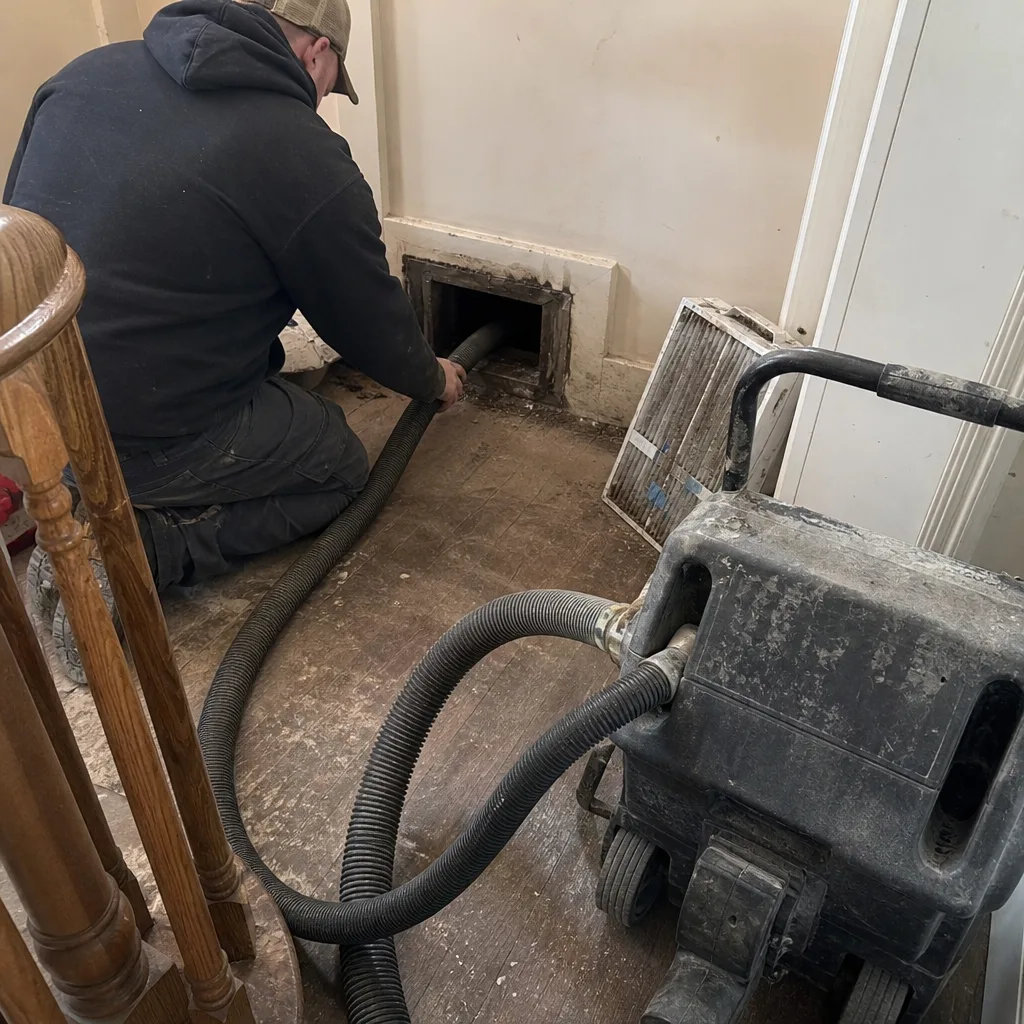 Before
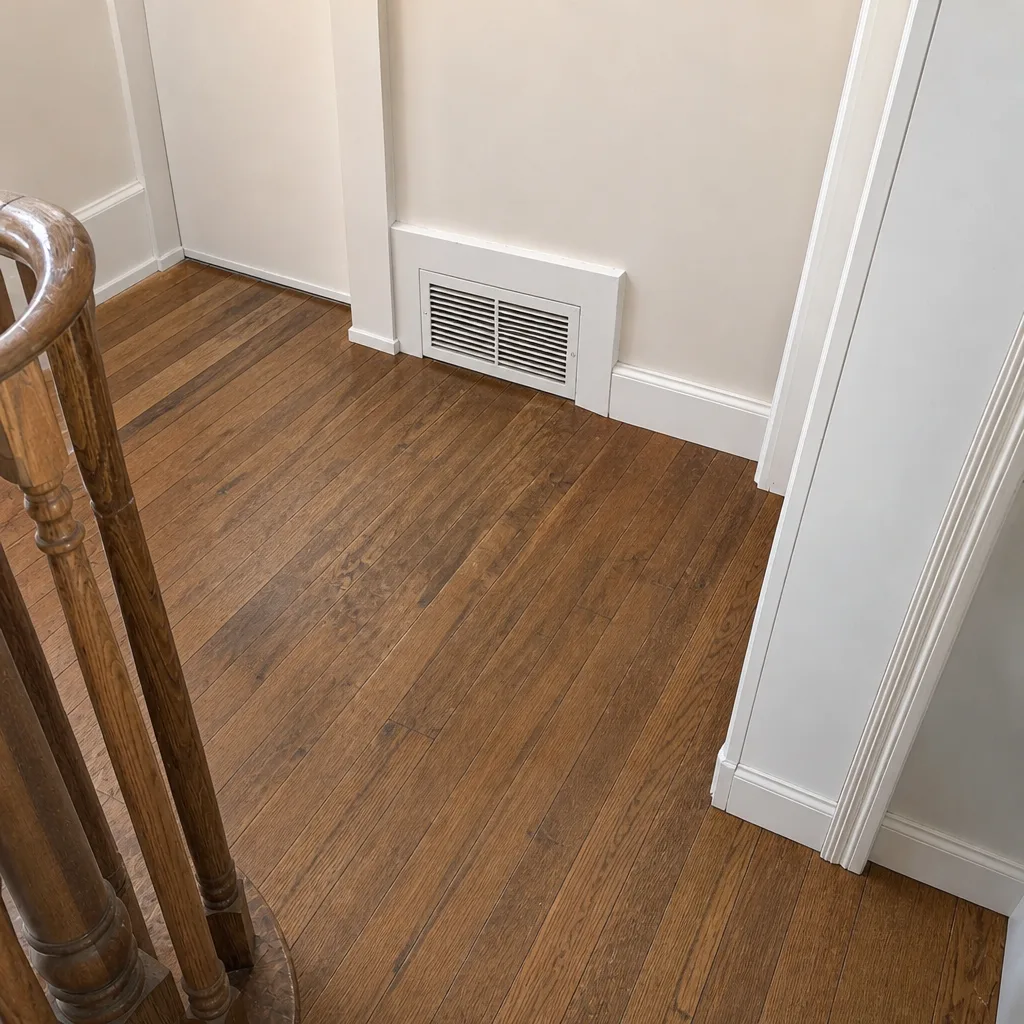 After
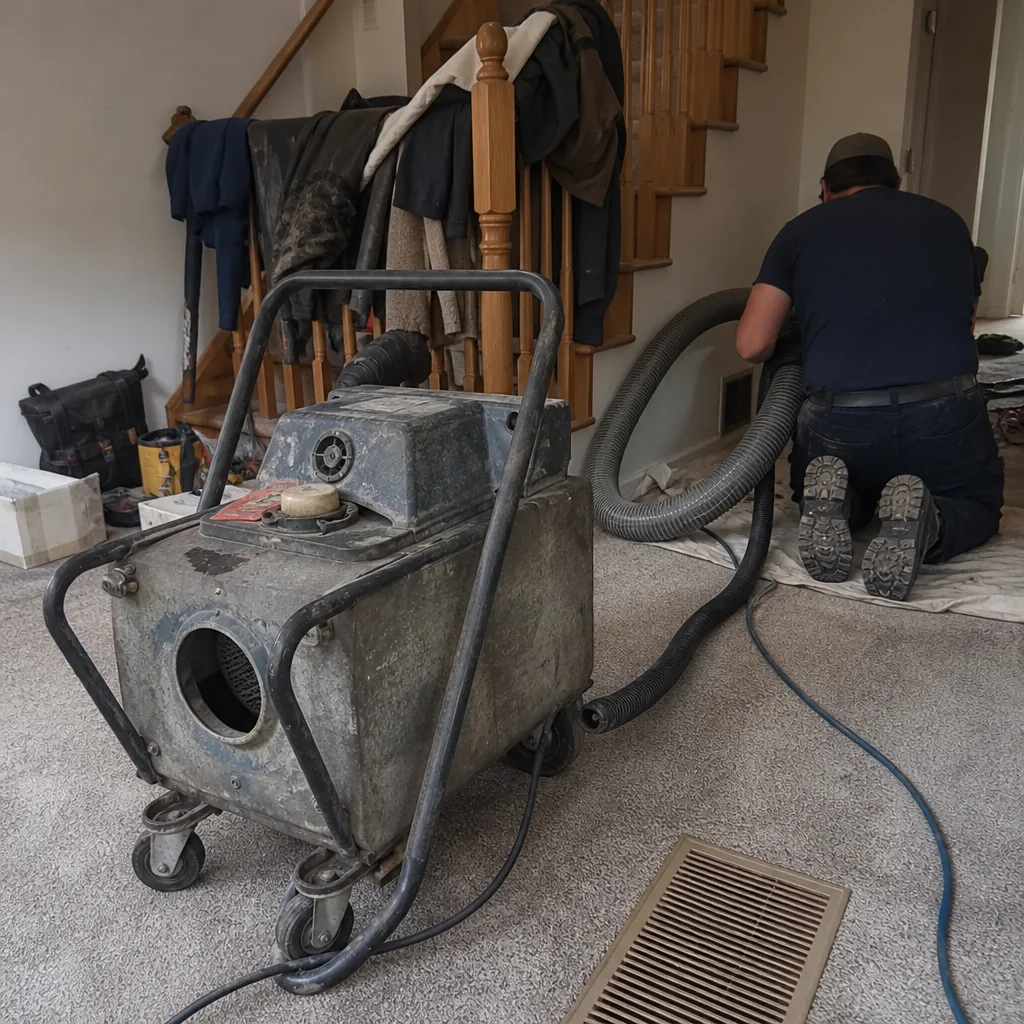 Before
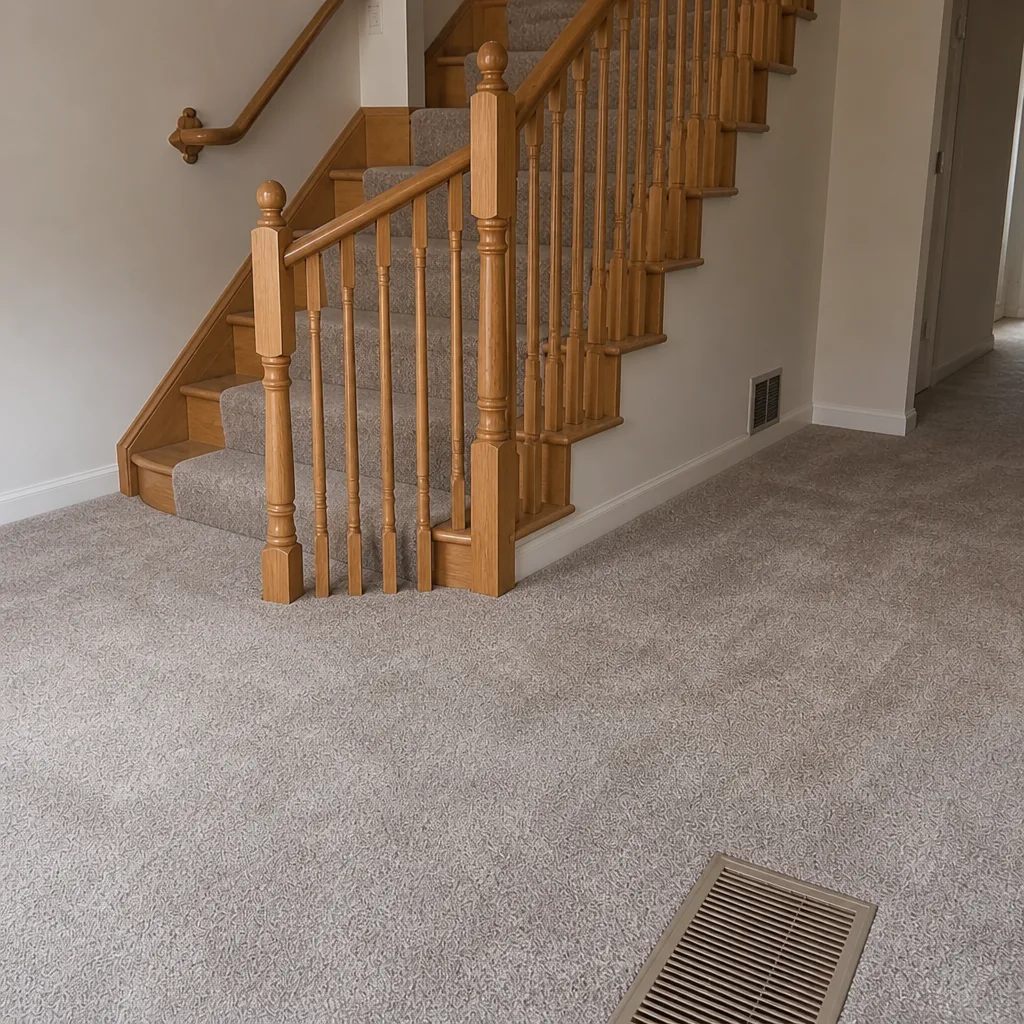 After
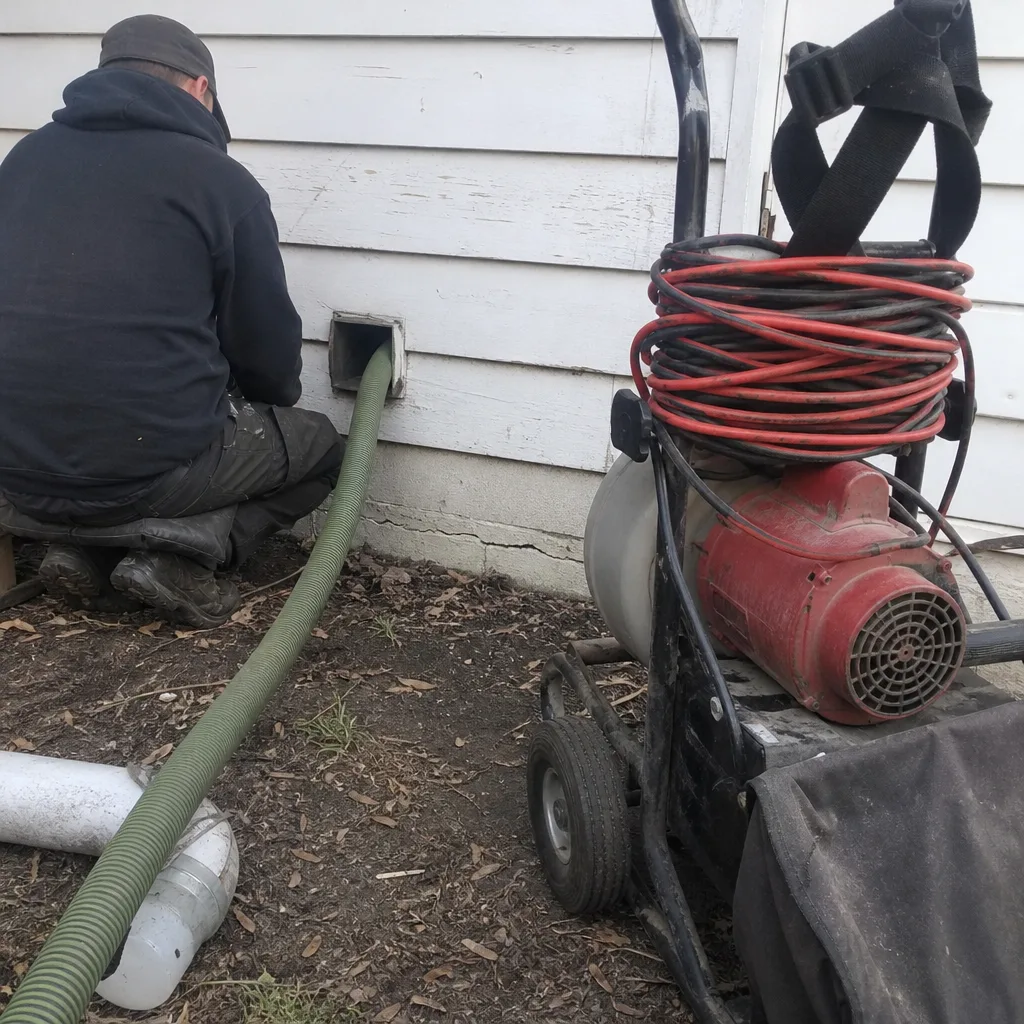 Before
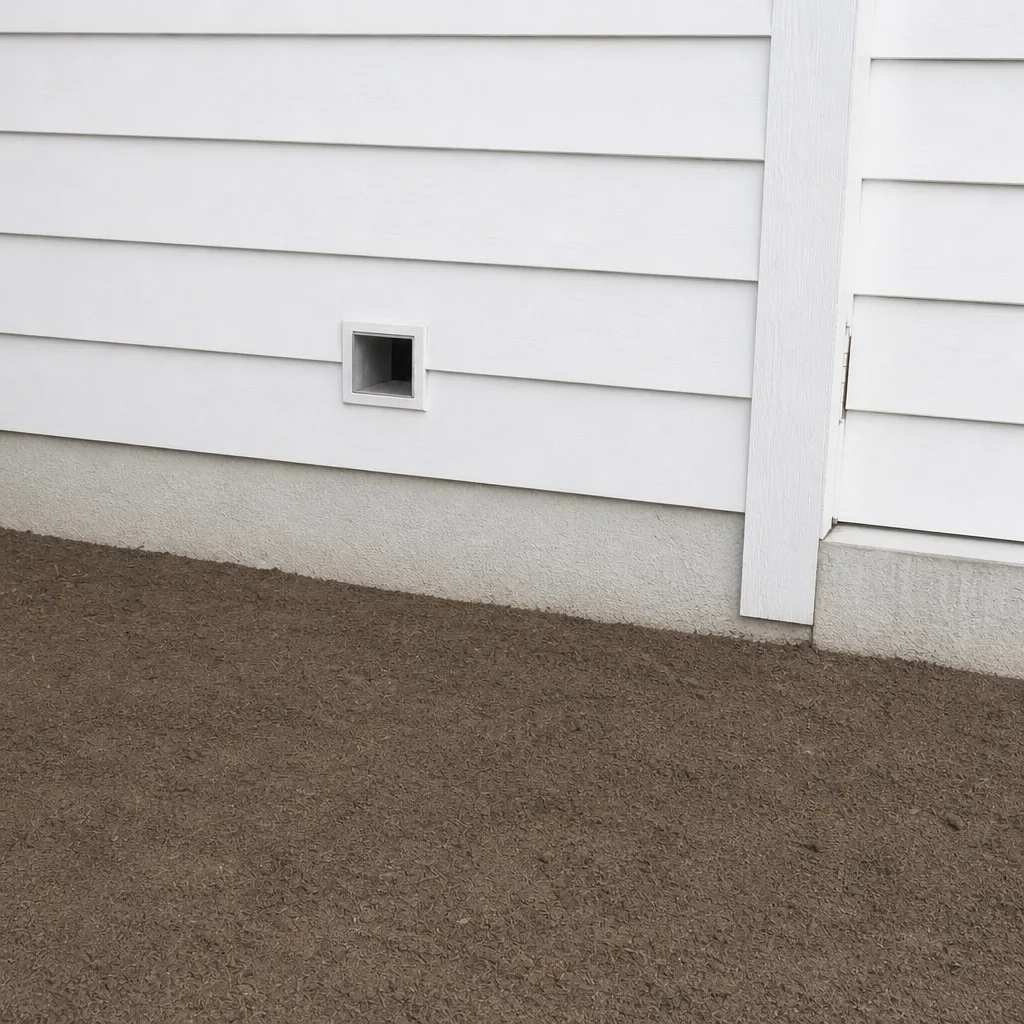 After
When to Call a Professional
Call a professional for any of these situations. If your St. Paul home has had a fire of any size, water in the basement that reached the furnace or ductwork, or a furnace failure involving a smell of gas or soot near the equipment. If you can see dark staining on any register grille, smell smoke or mustiness near a supply vent when the system is off, or find visible water in a duct run. If your insurance company is asking for documentation of the duct condition. If a renovation or contractor has just finished a project and the ductwork was exposed during the job. If you simply don’t know when the ducts were last inspected and the house has been through a prior event you weren’t around for.
Ambassador Air Duct Cleaning offers free estimates in St. Paul – call (888) 501-7655. We answer 24/7. Fast dispatch from 7am to 7pm, Sunday through Friday, and we’re closed on Saturday. A call outside dispatch hours is booked into the next opening, Sunday through Friday, 7am to 7pm.
Frequently Asked Questions
Yes, in nearly every case, because smoke doesn’t respect room boundaries. Even a contained fire pulls smoke into the return system and deposits residue throughout the ductwork, and that residue keeps off-gassing for weeks. A post-fire inspection tells you whether the contamination is localized or spread through the whole system, and that determines whether a targeted cleaning or a full system cleaning is the right approach.
No, not until the ducts have been inspected. The system will attempt to run on its own, and if water, sediment, or biological material has entered the ductwork, running the fan pushes all of it into every room in the house. Shut the system down at the thermostat first, extract the standing water, document the water line, and then arrange the duct inspection. Call (888) 501-7655 if you need a post-flood inspection scheduled.
It depends on the size and layout of the system, the extent of the contamination, and whether repair is needed alongside the cleaning. We don’t quote per-vent prices because a per-vent number doesn’t tell you anything about the actual condition of your ducts. Every job gets a written estimate with a flat price for the whole system agreed before any work starts, and the written estimate sets the final price.
Often yes under the dwelling protection portion of the policy for a covered loss, but it’s usually not itemized in the adjuster’s first estimate. You need to ask for it, and asking effectively means presenting a post-emergency inspection report and a scope of work with the duct line items broken out separately from the general restoration work. Keep every photo and every document, and request a supplemental estimate if the first one excludes ductwork.
Cheap quotes after a flood usually skip the containment, the moisture readings, and the post-work photo documentation – sometimes all three. Those are the parts that actually answer whether the job was done. A quote that doesn’t include a written scope of work, doesn’t include before-and-after photos of the duct interior, and doesn’t address whether the duct materials need to be replaced rather than cleaned is not a comparable quote. We give a flat price per system agreed before work starts, with before-and-after photos of your ducts when the job is done.
Ask for before-and-after photos of the duct interior, and ask for a written scope of work that lists what was cleaned, what was inspected, and what was found. If the technician can’t produce photos of the duct interior, the work can’t be verified, and an insurance claim or a dispute later on has nothing to rest on. We include before-and-after photos on every job as a standard part of the process.
Get a licensed HVAC technician to inspect the furnace before running it further – a cracked heat exchanger or a gas issue is a serious safety concern, and carbon monoxide is the risk that makes that inspection urgent rather than optional. Once the furnace itself is safe, arrange a duct inspection to check for any byproduct that entered the system during the failure window. Call (888) 501-7655 and we’ll help you get both booked.
Yes, and it takes about fifteen minutes. Photos of the duct layout, the furnace rating plate, the registers in each room, and any past cleaning records give your future claim a baseline and let whichever contractor responds to the loss see the system’s condition before the event. Homeowners who have this file face fewer coverage questions and get to a decision faster.
The Bottom Line
St. Paul homeowners face three duct emergencies – fire, flood, and furnace failure during a cold snap – and the right response sequence matters more than the size of the cleanup. Shut the system down first. Document what you see. Call for a post-emergency inspection before the heat comes back on. Keep a pre-event file of duct photos, past cleaning records, and the furnace rating plate so the insurance process moves faster if you ever need it. And when the inspection does happen, insist on before-and-after photos and a written scope of work: those two documents are the difference between a job that’s provably done and a job you have to take on faith.
If you’ve been through a fire, a flood, or a furnace failure and you’re not sure whether the ductwork needs attention, call (888) 501-7655. We answer 24/7. Fast dispatch from 7am to 7pm, Sunday through Friday, and we’re closed on Saturday. The estimate is free, the price is agreed before work starts, and every job gets before-and-after photos of your own ducts – professional-grade equipment from Rotobrush, Nikro, and Abatement Technologies on every visit, with duct repair capability on top of cleaning when it’s needed. Our technicians have up to 10 years of experience. Licensed and insured. One flat price per system. That’s what a post-emergency response should look like.
Written by the team at Ambassador Air Duct Cleaning.