
Last updated November 15, 2026
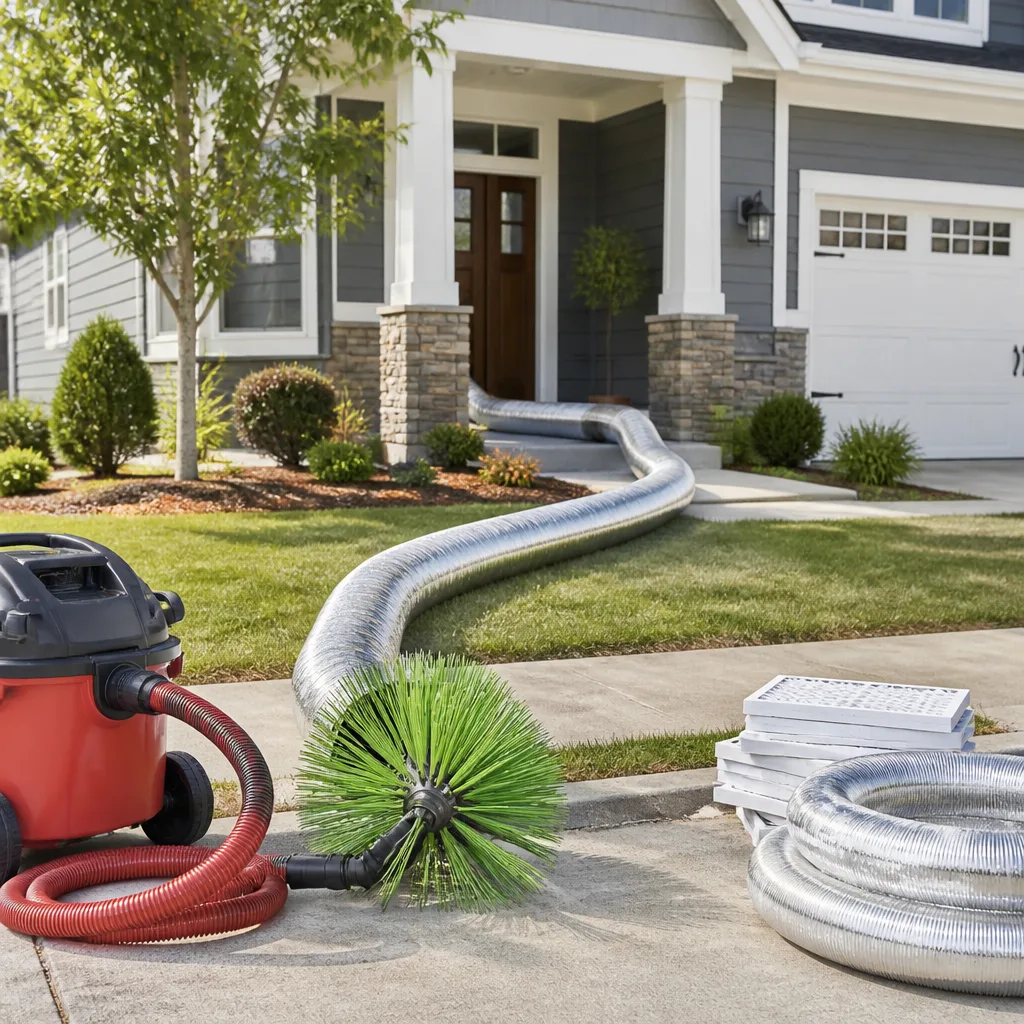 Whole-home duct cleaning
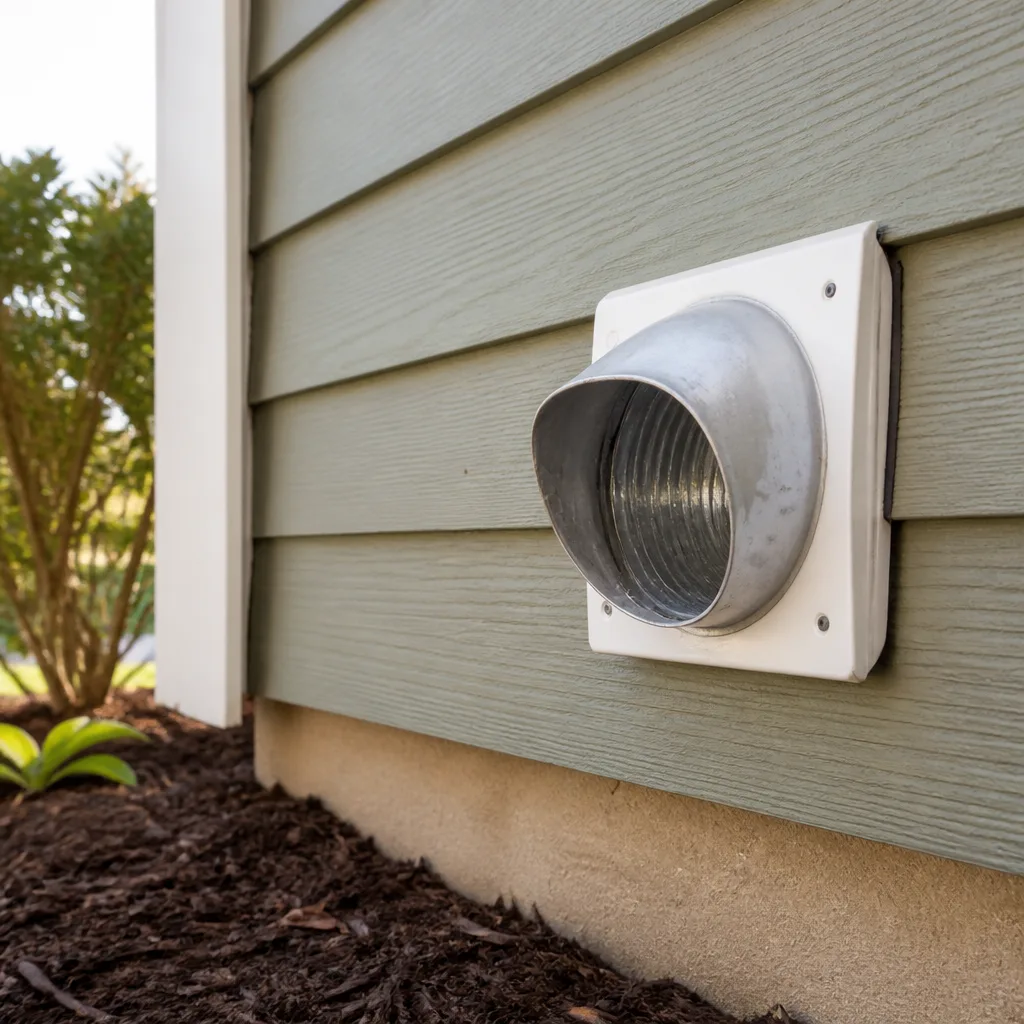 Dryer vent cleaning
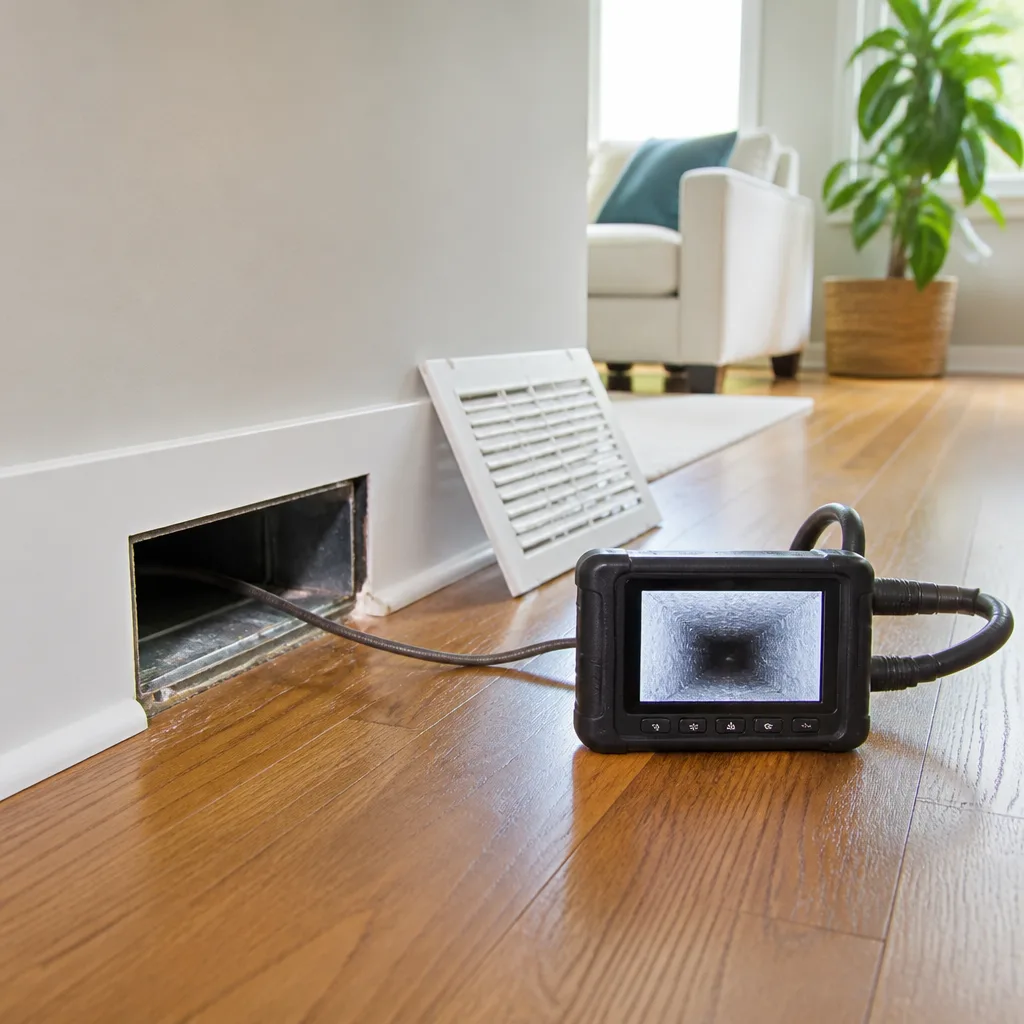 Camera inspection
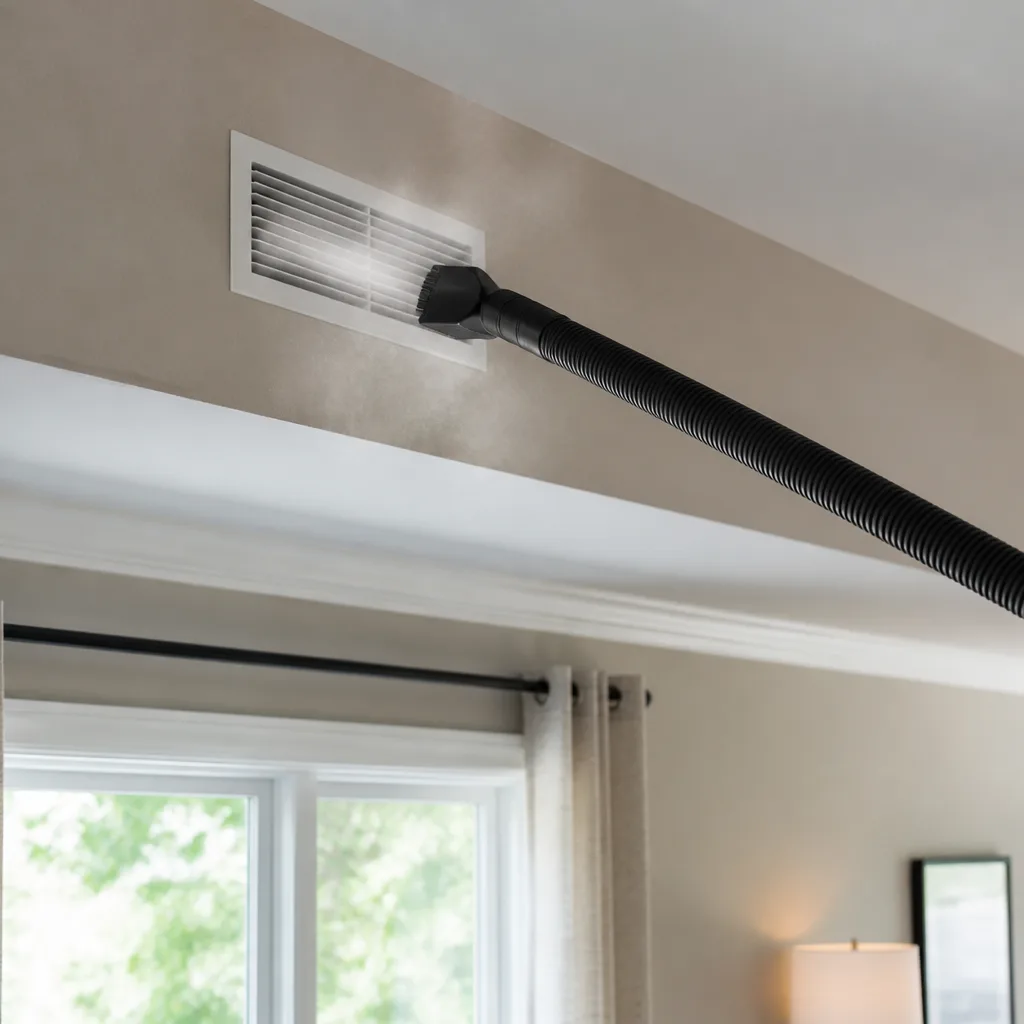 Sanitizing & deodorizing
Whole-system duct and dryer vent check with before-and-after photos - you see exactly what came out of your vents
That "$99 whole-house special" is a bait ad - the real number appears once they are in your hallway, or the "clean" is a shop-vac at the register. We photograph the inside of your ducts before and after instead.
DIY vs Professional Air Duct Cleaning: The St. Paul Homeowner’s Decision Guide
A sixty-dollar dryer vent brush kit and a shop vac can clean the first 18 inches of a supply duct. The average supply run in a St. Paul split-level is about 14 feet. That math explains the entire DIY limitation, and it’s the honest place to start any conversation about doing this yourself. Consumer tools aren’t useless, but they document that your ducts are dirty rather than remove what’s really in them. This guide maps what you can actually reach with homeowner equipment, the maintenance tasks that genuinely belong in your hands, where DIY crosses into a losing bet, and how to prepare a St. Paul home so a professional visit delivers full value instead of a rushed pass.
Quick Answer
DIY air duct cleaning works for the surfaces you can see and reach: registers, return grilles, and dryer vent maintenance. It does not work for the main trunk lines and long supply runs, where consumer vacuums lack the airflow, agitation, and negative-pressure containment to pull debris out instead of pushing it around. For anything beyond visible surface cleaning, a professional with rotary brush and contact-cleaning equipment is the right call. Most St. Paul homes fall into a middle zone where regular DIY upkeep extends the interval between professional cleanings rather than replacing them.
Styles & brands we work with
- Whole-home duct cleaning
- Dryer vent cleaning
- Camera inspection
- Sanitizing & deodorizing
Table of Contents
- What Homeowner Tools Can Actually Reach
- The Tasks That Are Genuinely DIY-Appropriate
- Why DIY on Main Trunks Can Make Air Quality Worse
- The Cost-Benefit Math: When DIY Extends the Interval
- How to Prepare Your Home Before a Professional Arrives
- St. Paul Housing, Climate, and Duct Realities
- Common Mistakes to Avoid
- When to Call a Professional
What Homeowner Tools Can Actually Reach
The honest capability map starts with airflow. A shop vac moves a modest volume of air through a narrow hose and relies on you physically pushing the nozzle to the dirt. A professional truck-mounted or portable system moves far more air and uses negative pressure to hold the whole duct run under vacuum while a rotary brush agitates the walls. One pushes; the other pulls everything toward a sealed collection point. That difference is the whole game.
Here’s what consumer equipment can typically handle:
- Surface registers and grilles. You can remove them, wash them, and clear visible dust and lint.
- The first foot or two of a supply run. A flexible brush can reach in and loosen loose surface debris.
- Dryer vent duct runs that are short, straight, and accessible.
- Return air filter slots and grilles, which collect a surprising amount of lint on their own.
Here’s what consumer equipment cannot realistically handle:
- Long horizontal supply runs, especially the flex duct common in St. Paul basement and attic retrofits.
- Main trunks and plenum areas, where debris concentrates and volume is largest.
- Contamination scenarios involving mold, pest activity, or post-renovation drywall dust, which require containment.
- Branches with turning vanes or elbows that a straight consumer brush can’t navigate.
In our experience, the moment a homeowner sees the first few feet come back clean, they assume the whole run is clean. It almost never is. That 18-inch reach against a 14-foot run is the gap this decision turns on.
The Tasks That Are Genuinely DIY-Appropriate
Some maintenance legitimately belongs in your hands, and doing it well saves real money over time. Here are the three tasks we’d never talk a homeowner out of.
1. Cleaning registers and return grilles
- Turn off the HVAC system at the thermostat.
- Remove the register or return grille with a screwdriver.
- Wash it in a utility sink or outdoors with mild soap and water, then let it dry fully.
- Wipe the visible lip of the duct opening with a damp cloth.
- Reinstall once dry. Don’t over-tighten the screws into older drywall.
2. Dryer vent maintenance
- Unplug the dryer and pull it far enough forward to access the vent connection.
- Disconnect the vent, then clear lint from the flexible transition duct.
- Use a vent brush to clear the run, following the manufacturer’s direction for your kit.
- Vacuum the dryer’s rear vent port and the outdoor termination flap.
- Reconnect, verify the flap opens freely when the dryer runs, and check that lint isn’t packing against the exterior hood.
If the run is long, has multiple elbows, or terminates on a roof, leave it to a professional. A clogged dryer vent is a documented fire risk, and partial clearing can give false confidence. This is exactly why dryer vent cleaning is one of our three core services rather than an afterthought.
3. Return grille filter replacement
- Note the filter size printed on the frame.
- Replace with the same nominal size and a MERV rating your system’s blower can handle (many St. Paul homes run comfortably in the MERV 8 to MERV 11 range, but check your equipment manual).
- Write the install date on the filter frame edge with a marker so you stop guessing.
- Check monthly during heating season and replace when visibly loaded.
Why DIY on Main Trunks Can Make Air Quality Worse
Here’s the counterintuitive part. When you disturb debris in a large trunk line without proper negative-pressure containment, you can loft particles into the airstream and redistribute them into living spaces. You don’t remove the debris; you just move it somewhere less convenient. We’ve seen this pattern in St. Paul homes after a weekend of enthusiastic shop-vac work: a temporary spike in dust on surfaces, more allergy complaints for a few days, and the same dirty trunk underneath it all.
The reason comes down to containment. Professional work with Abatement Technologies equipment creates negative pressure so the debris field has one direction to travel: out, into a sealed collection system. Without that, every disturbance is a small spread event. This is also why we run Rotobrush contact-cleaning systems and Nikro equipment on every job. The rotary brush loosens the wall film, the vacuum captures it, and the containment keeps it from drifting back into the rooms you live in.
If you’re dust-sensitive, have a family member with respiratory concerns, or you’ve just finished a renovation, don’t experiment on the trunk lines. The risk of making things temporarily worse is real, and the upside is small.
The Cost-Benefit Math: When DIY Extends the Interval
This is where the DIY-versus-pro debate gets genuinely useful. Skilled homeowner upkeep doesn’t substitute for professional cleaning, but it can legitimately stretch the interval. A St. Paul home that gets register cleaning, filter changes, and dryer vent upkeep every few months will typically hold up longer between full-system cleanings than one that gets none of it.
Think of it as two tiers:
- Tier 1 – Homeowner maintenance: Registers, grilles, filters, dryer vent surface work. Low cost, high frequency, genuinely useful.
- Tier 2 – Professional service: Full trunk and supply-run extraction with containment, agitation, and repair capability. Higher cost, lower frequency, physically necessary for the deep work.
The reasonable split is quarterly Tier 1 and periodic Tier 2. Where that period lands depends on your home: pets, recent renovation, smoker in the house, age of the system, and whether the ducts have ever been thoroughly cleaned. If you can’t remember the last full cleaning, the answer to “when” is probably “sooner than you think.” A free estimate is the cheap way to find out exactly where you stand. For context on what that visit involves, see our dedicated page on air duct cleaning.
| Task | Frequency (typical) | Who Should Do It |
|---|---|---|
| Register & grille cleaning | Every 2-3 months | Homeowner |
| Filter replacement | As loaded, check monthly | Homeowner |
| Dryer vent surface clearing | Every 6-12 months | Homeowner (short runs) |
| Full supply-run & trunk cleaning | Every 2-5 years depending on conditions | Professional |
| Duct repair & sealing | As needed | Professional |
How to Prepare Your Home Before a Professional Arrives
A prepared home gets more value from a professional duct cleaning visit. That’s not a sales line; it’s a practical truth. Clear access means more of the working time goes into the ducts and less into moving furniture. Here’s what actually helps.
- Move furniture away from floor registers and return grilles so the technician can remove and reinstall them without negotiating around a sofa.
- Clear a path to the mechanical room or furnace closet, plus any attic or crawlspace access hatch the technician will need.
- Turn off the HVAC system before arrival and leave the thermostat set to off until the work is done.
- Note suspicious spots – a register that blows weaker than others, a room that’s always dustier, a duct that hums. Write them down and point them out.
- Secure pets in a room that isn’t part of the work area.
- Be available for the before-and-after walkthrough. Reputable work includes photos of your own ducts, and you want to see them.
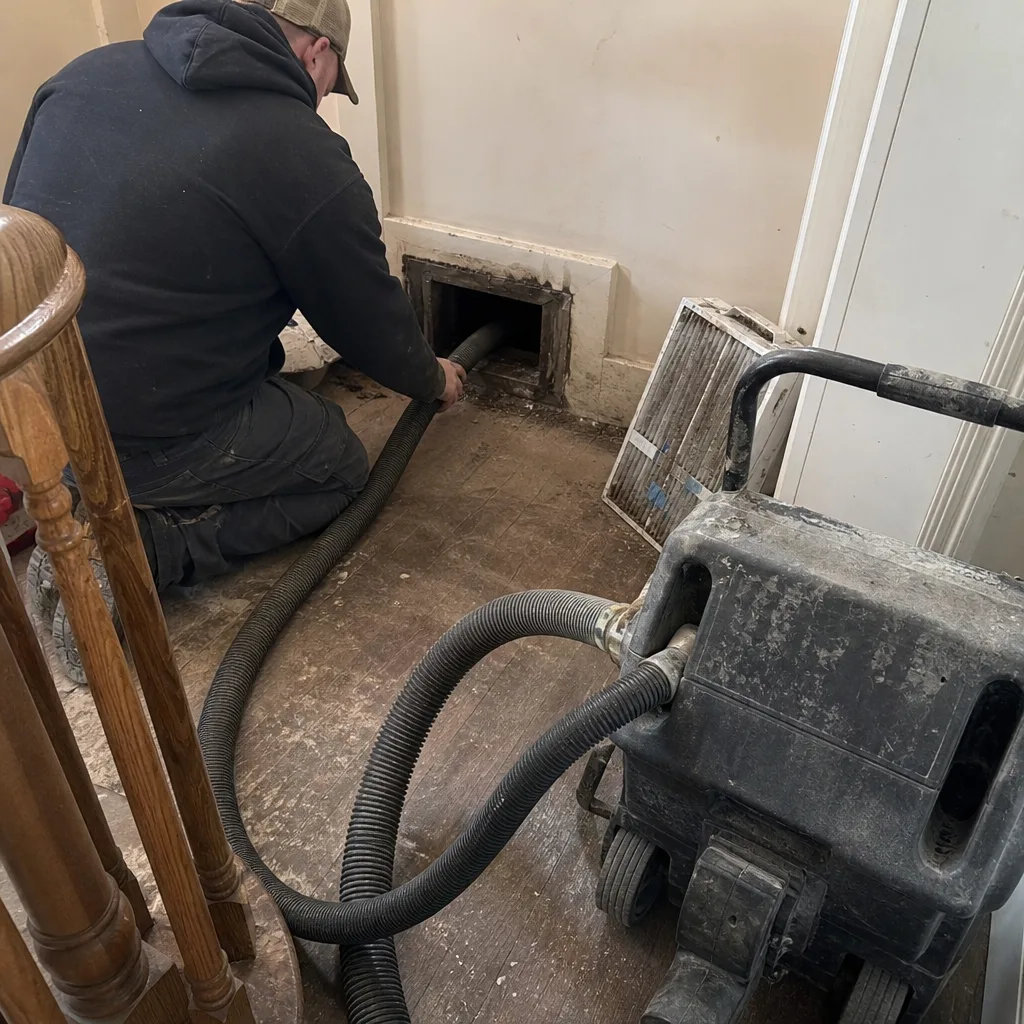
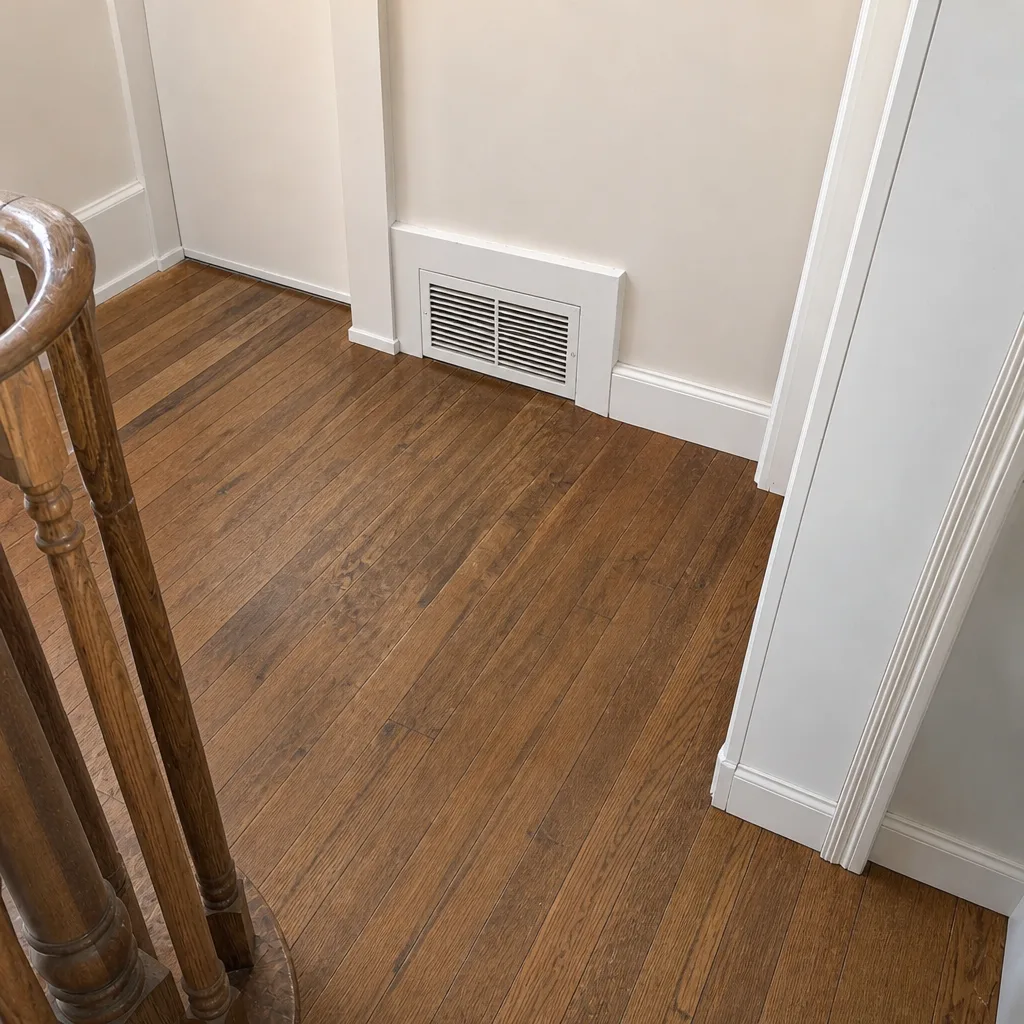
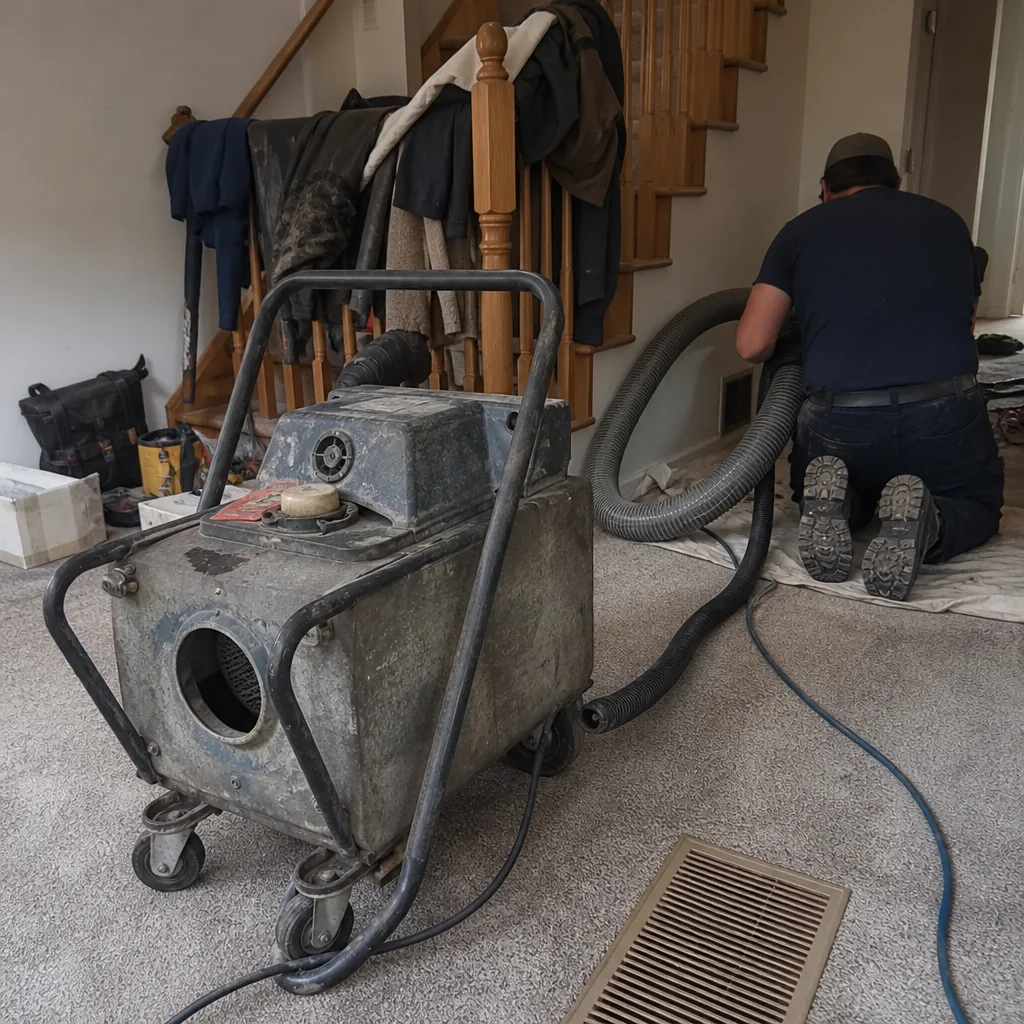
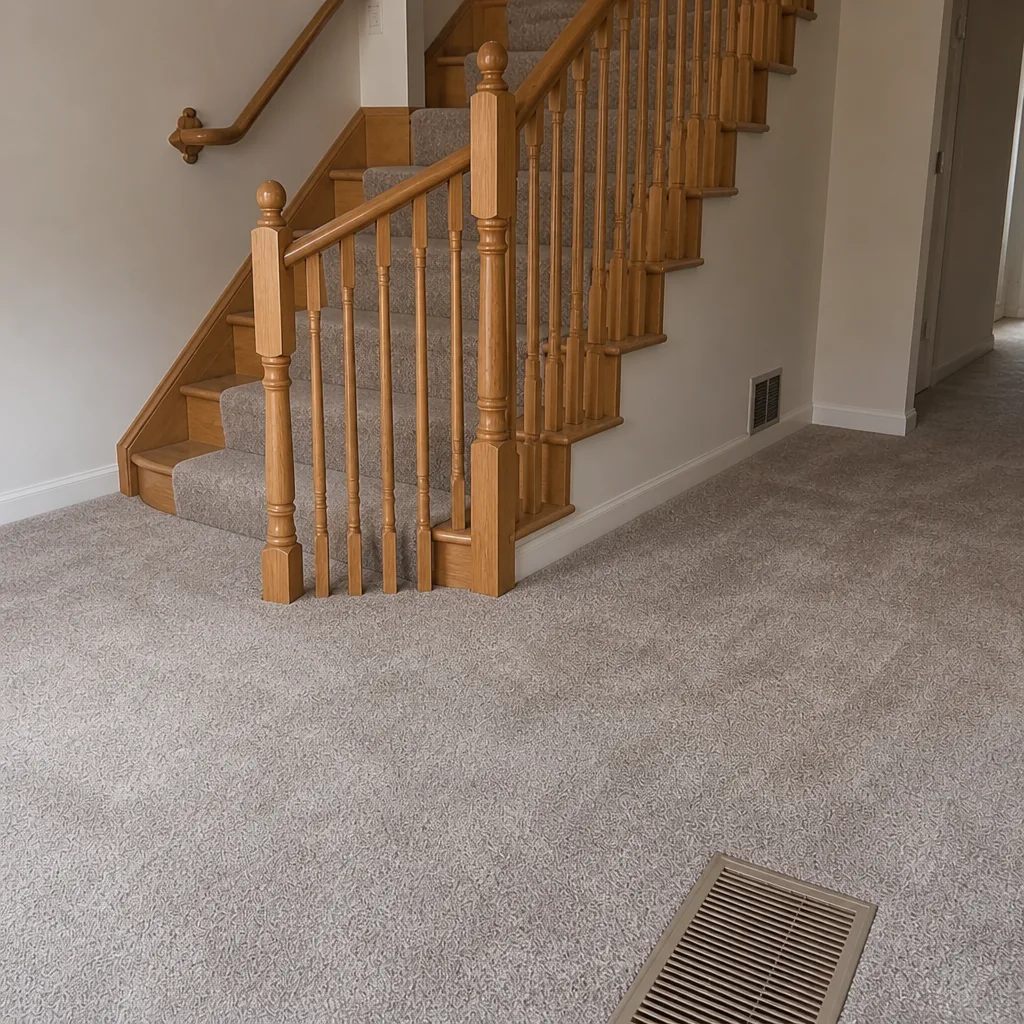
That last item matters more than most people realize. Before-and-after photos of your actual ducts are how you know the work happened. It’s also the single best defense against the industry’s bait-and-switch reputation problem. If the crew doesn’t offer photos, ask for them before you sign anything.
St. Paul Housing, Climate, and Duct Realities
St. Paul housing shapes what you’ll find inside the ducts more than most homeowners expect. A large share of the city’s housing stock is older: pre-war bungalows and four-squares, mid-century split-levels, and a range of post-war ramblers. That mix shows up in duct systems that vary wildly from block to block.
- Older homes in neighborhoods like Cathedral Hill, Summit-University, and the West Seventh area commonly have original sheet-metal trunks with branch runs that were added or modified over the years. We often find gaps, disconnected joints, and ductwork that leaks into crawlspaces.
- Split-levels across the East Side and Highland Park tend to have long, low-clearance supply runs that a consumer brush can’t negotiate – the exact 14-foot scenario in the opening.
- Post-war homes with retrofit flex duct in the attic or a knee wall collect dust quickly because air moves slowly through longer, softer runs.
- Every St. Paul home has to handle long heating seasons and dry winters, plus humid summers that push the air conditioner hard. Closed-up winter air concentrates whatever is sitting in the ducts, and that’s when people notice dust patterns and allergy symptoms.
St. Paul code and permitting don’t typically touch routine cleaning, but duct repair and replacement of runs often do. If a professional finds a disconnected duct or a crushed flex run, ask whether the fix requires a permit before agreeing to it. Your city’s building department can confirm. We’re free to describe the repair, but you should know the permitting picture.
We repair what other companies only clean around. That’s one of the few duct services we consider non-negotiable as part of the visit. Cleaning over a broken joint just moves the problem. More on the broader St. Paul picture is on our St. Paul page.
Common Mistakes to Avoid
- Shop-vac’ing the main trunk without containment. You can redistribute debris into your living space and cause a short-term air quality dip. That’s the opposite of what you wanted.
- Running a consumer brush deep into flex duct. Flex duct has a ribbed interior and internal supports; aggressive brushing can tear the liner. Once it tears, air leaks and the run needs repair, not more cleaning.
- Pointing a blower fan down a register to “blow it out.” This pushes dust into rooms and often into the return side, which then recirculates through the system. It’s the fastest way to make things worse.
- Skipping the dryer vent because the clothes still dry. Dryers can vent adequately at the start of a load and slowly lose efficiency as lint loads. Partial clearing feels done but often isn’t.
- Believing a coupon flyer that shows up in the mailbox. St. Paul gets its share of generic duct-cleaning mailers with low headline prices. Ask what the full job costs before agreeing, and insist on a written estimate.
- Cleaning ducts after a plumbing leak or rodent issue without inspection. Water intrusion and pest activity in ductwork call for more than cleaning – they call for inspection and often repair. Cleaning over contamination without fixing the source wastes the visit.
- Ignoring the return side. Homeowners focus on supplies. Returns carry the dustiest air and are usually where the worst buildup lives.
When to Call a Professional
Call us when the situation has crossed out of the “I can handle this with a shop vac” zone. That typically means: post-renovation cleanup where drywall dust has entered the system, visible debris at multiple registers, mold concerns or musty odors, pest evidence in ductwork, a room that’s noticeably dustier than the rest, ducts that haven’t been cleaned in years and no clear record of prior work, or a dryer vent that runs long and hasn’t been checked recently. If you’ve tried the DIY surface maintenance and the problem persists, that’s your sign. Duct repair needs are also a professional call, because cleaning around a disconnected or crushed run doesn’t fix the underlying issue.
Ambassador Air Duct Cleaning offers free estimates in St. Paul – call (888) 501-7655. We answer 24/7. Fast dispatch from 7am to 7pm.
See the difference
 Before
 After
 Before
 After
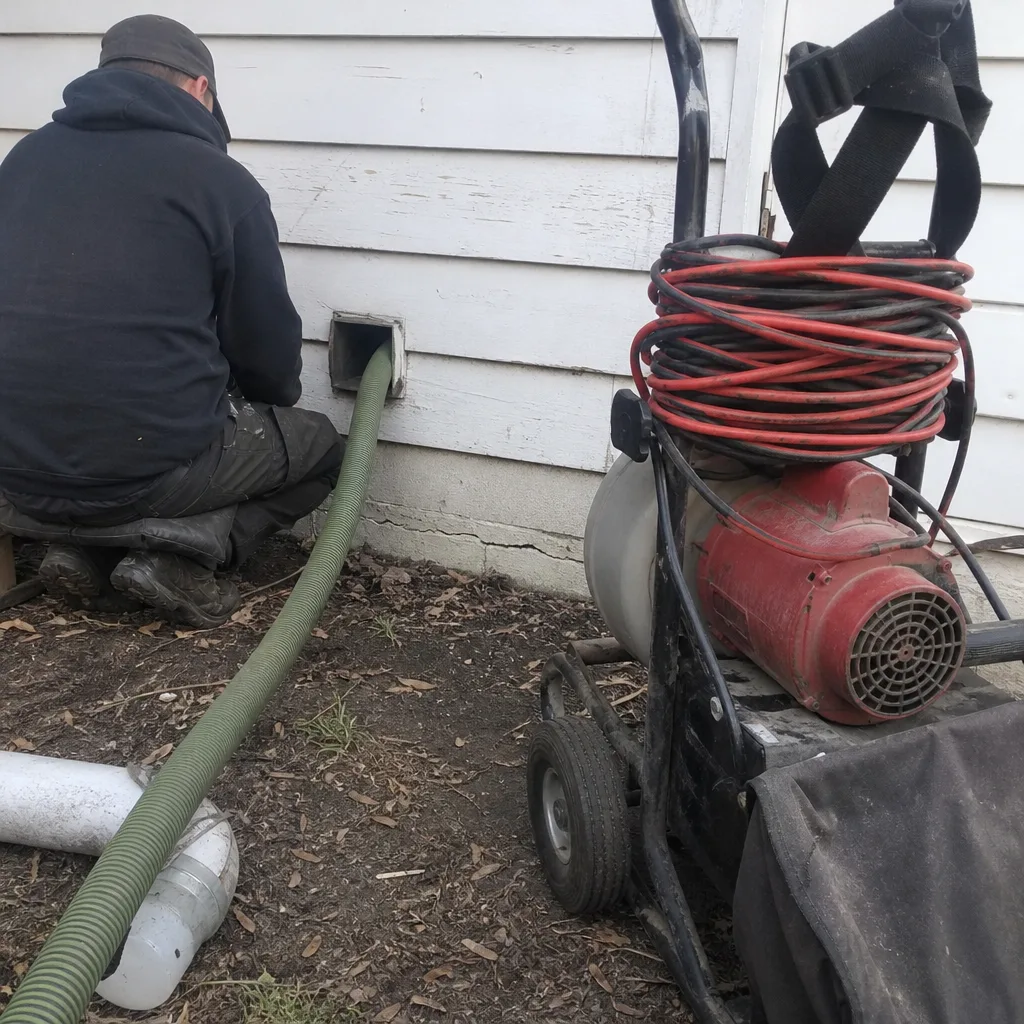 Before
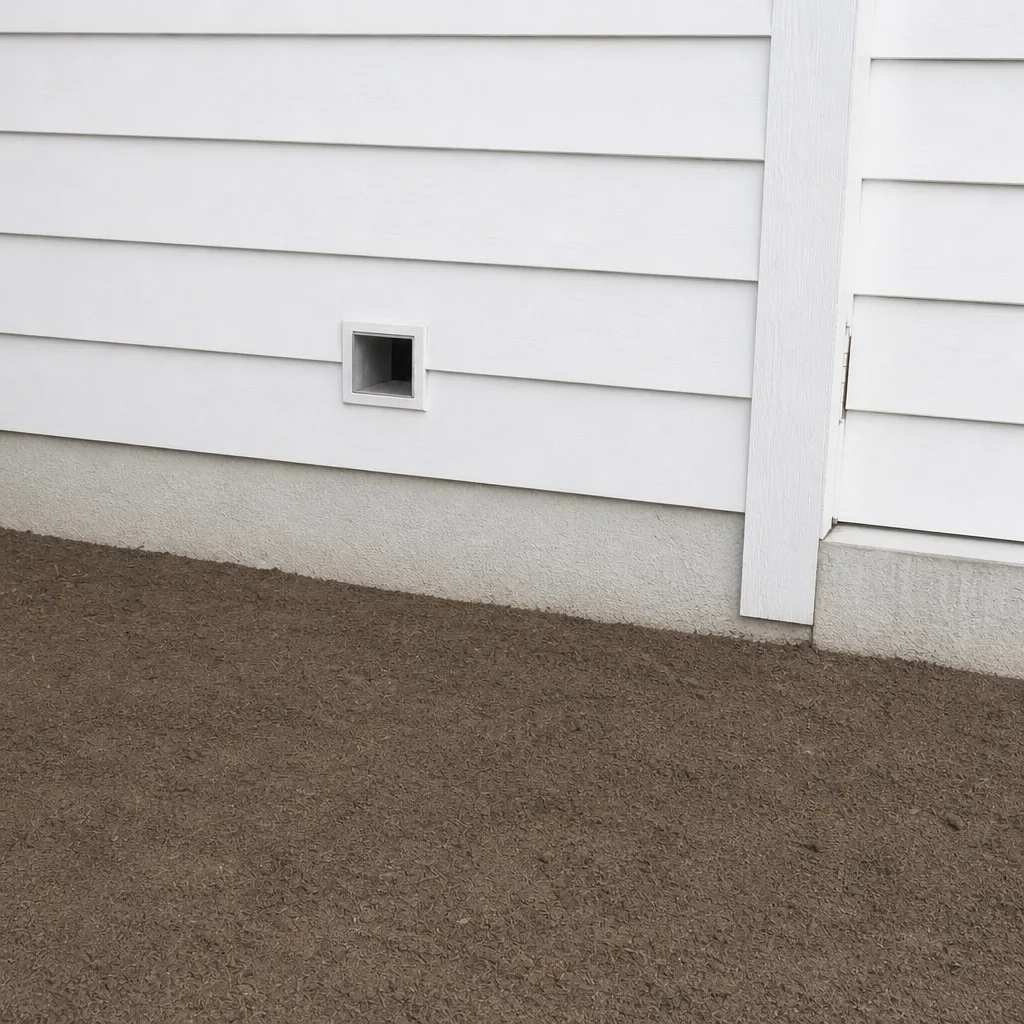 After
Frequently Asked Questions
Not for the main trunk lines and long supply runs. Consumer equipment can handle registers, grilles, filters, and short dryer vent runs, but it lacks the airflow, agitation, and negative-pressure containment needed to actually extract buildup from large runs. The realistic split is DIY maintenance plus periodic professional cleaning, not DIY replacing it.
The price depends on the number of systems and runs in your home, the condition of the ductwork, and whether repair is needed. We don’t quote per-vent prices or teaser figures, because that’s how the industry gets the bait-and-switch reputation it has. Call (888) 501-7655 for a free estimate and a written price before any work starts.
Cheap quotes usually reflect consumer-grade vacuums, per-vent pricing, or a quick pass that doesn’t include containment or repair capability. The tools matter. Rotobrush and Nikro systems move more air and agitate more thoroughly than a shop vac, and they cost more to operate. A written estimate that covers the whole job is the fair comparison, not a headline price.
Insist on before-and-after photos of your own ducts. That’s the most reliable proof, and any company worth hiring will provide them without being asked twice. Combine the photos with a written estimate upfront and a clear scope of what’s included, and you have real accountability. We take photos on every job for exactly this reason.
For most St. Paul homes, every two to five years is a reasonable working range, adjusted for pets, recent renovation, allergy concerns, and whether the ducts have ever been cleaned. Homes with active renovation or heavy pet dander trend toward the shorter end. DIY maintenance between visits can extend the interval, but it doesn’t eliminate the need for a proper cleaning.
It’s a bad idea when the run is long, has multiple elbows, or terminates on the roof. A clogged dryer vent is a documented fire risk, and partial clearing can create false confidence. Short, straight, accessible runs are fine for homeowner upkeep. Anything more involved should go to a professional who can verify the full run is clear.
No. Cleaning around a damaged joint without repairing it just hides the problem and moves air and debris through the gap. Duct repair is one of our three core services, and it’s a big part of why we recommend a professional inspection before any cleaning work starts. Fixing the cause is the only way the cleaning holds.
What should I do to prepare for the visit?
Move furniture off registers, clear access to the furnace and any attic or crawlspace hatch, turn the system off, and be available for the walkthrough. Point out any rooms that are dustier or any registers that blow weakly. That information helps the technician focus on what actually needs attention. Call (888) 501-7655 to book an estimate – estimates are free.
The Bottom Line
DIY air duct cleaning is useful for the visible surfaces – registers, grilles, filters, short dryer vent runs. It doesn’t replace professional cleaning of the trunk lines and long supply runs. The equipment gap is real: homeowner tools push dust around, while professional systems agitate and extract it under containment. The right approach is a two-tier routine: homeowner maintenance for the surfaces, professional cleaning for the deep work, with interval adjusted for your specific St. Paul home. If you tried DIY and the problem persists, or you’ve never had the ducts cleaned, that’s your answer.
Call (888) 501-7655 for a free estimate. We answer 24/7. Fast dispatch from 7am to 7pm, Sunday through Friday. Our technicians have up to 10 years of experience, and we use professional-grade Rotobrush and Nikro equipment on every job. A written estimate sets the final price before work starts. You’ll see before-and-after photos of your own ducts when we’re done. Any concerns about contamination or mold handling can be addressed with Abatement Technologies equipment. Whole-home air quality recommendations come from our product relationships with Honeywell and Aprilaire, so the conversation doesn’t end when the cleaning does. That’s what we mean when we say indoor air quality starts inside your walls – and that is exactly where we work. We’re proud to serve St. Paul homeowners with the kind of equipment and repair capability the job actually calls for. To learn more about us, visit Ambassador Air Duct Cleaning.
Written by the team at Ambassador Air Duct Cleaning.